


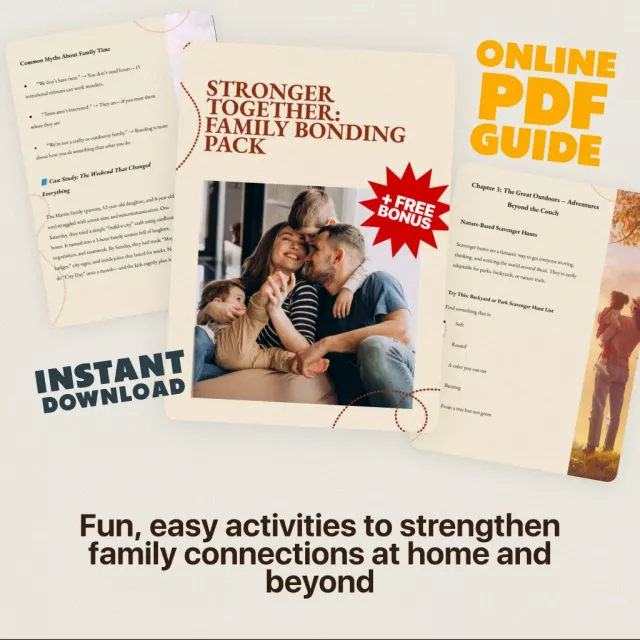
Strengthen Your Family Bond – One Activity at a Time
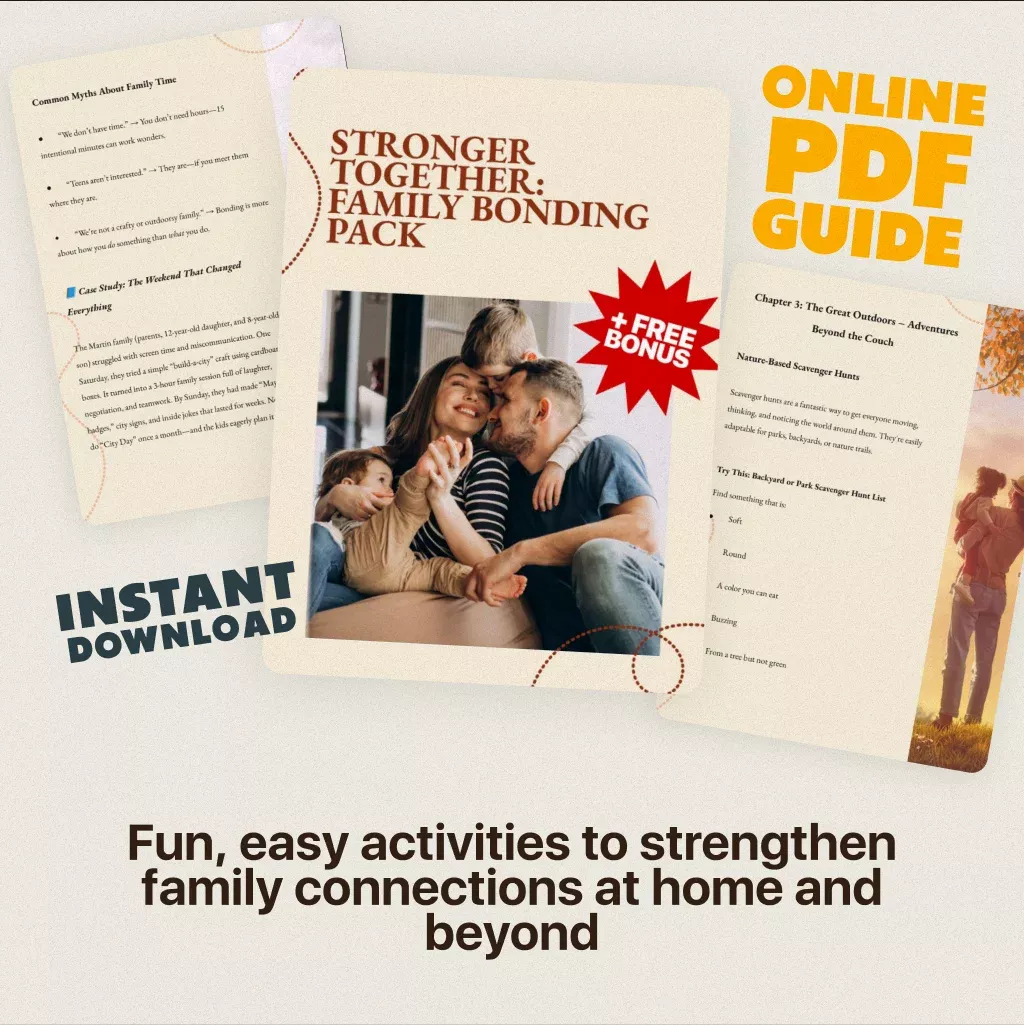
Looking to bring your family closer without relying on screens or spending a fortune? The Stronger Together: Family Bonding Pack is your go-to digital guide packed with engaging, easy-to-follow activities designed to create unforgettable moments between you and your loved ones. Whether you’re navigating a busy school year or trying to make the most of a quiet weekend, this printable family time checklist, guide, and eBook offers everything you need to nurture lasting connection in simple, fun ways.
This beautifully designed digital download is filled with at-home ideas and outdoor adventures that spark joy, deepen trust, and bring all ages together. From toddlers to teens—and even the adults—everyone gets to join in. Ideal for busy parents, caregivers, or anyone who values quality time, this is more than a guide. It’s a roadmap to togetherness.
What’s Inside the Family Bonding Pack?
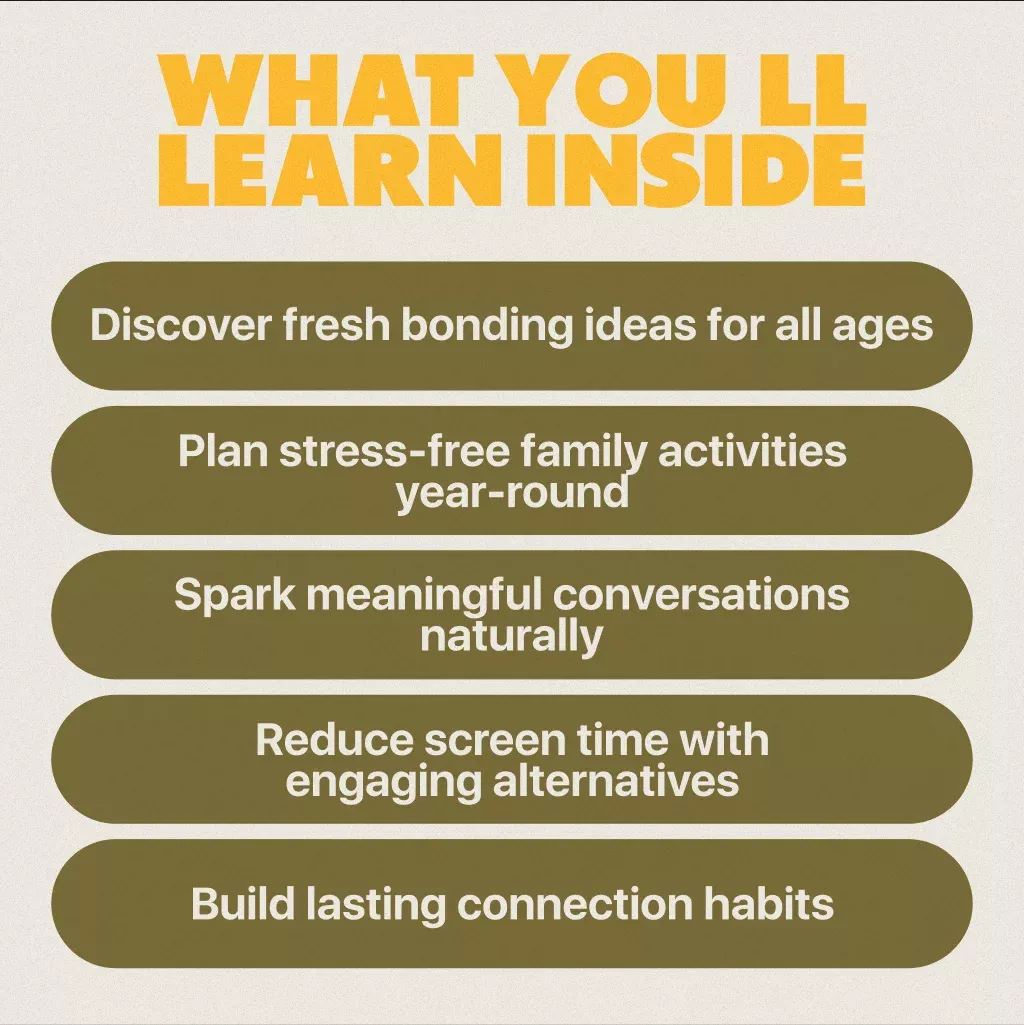
- Chapter 1: Why Family Bonding Matters – Learn the science behind strong families and uncover the emotional benefits for all ages.
- Chapter 2: Creative Corners – At-Home Adventures – Weekend craft projects, simple science experiments, and conversation starters for every day.
- Chapter 3: The Great Outdoors – Adventures Beyond the Couch – Nature scavenger hunts, backyard games, and stargazing nights that make memories.
- Chapter 4: Keeping It Going – Building Habits That Last – Create a personalized connection plan that evolves with your family.
Why You’ll Love This Guide
- Printable and digital-friendly – Use it your way: from your phone, tablet, or printed out for hands-on access.
- Fun for all ages – Activities are adaptable for kids ages 3–13+ and enjoyable for adults too.
- Screen-free connection – Meaningful alternatives to technology that bring families back to what matters.
- Evidence-based and practical – Backed by real stories, psychology, and doable strategies that stick.
- Reusable and customizable – Designed to be used again and again, every season of the year.
Who It’s For
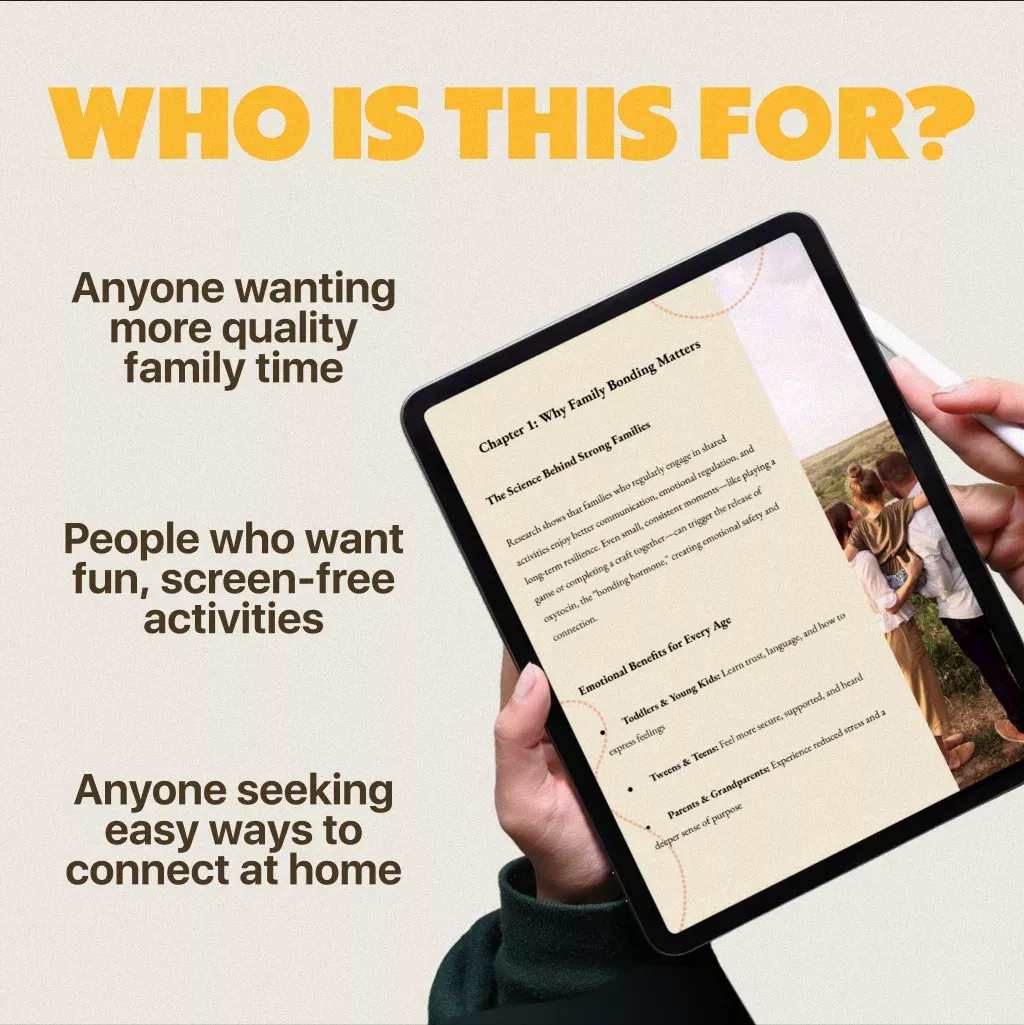
This guide is perfect for parents, caregivers, homeschoolers, and even grandparents looking for engaging family activities that go beyond the usual. Whether your family is just starting out or you’re looking to reconnect, the Stronger Together: Family Bonding Pack meets you where you are.
What Makes It Different
Unlike other family activity books, this digital download blends psychology, fun, and real-world usability into one accessible guide. It’s not just another list of games—it’s a tool to help you build a stronger emotional foundation with your family through intentional bonding time.
Ready to Strengthen Your Family Bond?
Don’t wait for the “perfect time.” Start creating deeper, more joyful connections today. Download the Stronger Together: Family Bonding Pack now and enjoy meaningful family time that actually sticks.
Order cancellation
All orders can be cancelled until they are shipped. If your order has been paid and you need to make a change or cancel an order, you must contact us within 12 hours. Once the packaging and shipping process has started, it can no longer be cancelled.
Refunds
Your satisfaction is our #1 priority. Therefore, you can request a refund or reshipment for ordered products if:
- If you did not receive the product within the guaranteed time( 45 days not including 2-5 day processing) you can request a refund or a reshipment.
- If you received the wrong item you can request a refund or a reshipment.
- If you do not want the product you’ve received you may request a refund but you must return the item at your expense and the item must be unused.
We do not issue the refund if:
- Your order did not arrive due to factors within your control (i.e. providing the wrong shipping address)
- Your order did not arrive due to exceptional circumstances outside the control of stellartrendnook.shop (i.e. not cleared by customs, delayed by a natural disaster).
- Other exceptional circumstances outside the control of https://stellartrendnook.shop
*You can submit refund requests within 15 days after the guaranteed period for delivery (45 days) has expired. You can do it by sending a message on Contact Us page
If you are approved for a refund, then your refund will be processed, and a credit will automatically be applied to your credit card or original method of payment, within 14 days.
Exchanges
If for any reason you would like to exchange your product, perhaps for a different size in clothing. You must contact us first and we will guide you through the steps.
Please do not send your purchase back to us unless we authorise you to do so.
Instant download
Your purchase will be available to download once payment is confirmed.
Instant download items don’t accept returns, exchanges or cancellations. Please contact us if you have any problems








The outdoor connection activities have been a blast! My kids can't wait to do them again.
Absolutely love the checklist feature in this product - it's so satisfying ticking off each activity once done!
I’ve been really enjoying these printable at-home activities lately, and they’ve quickly become one of my go-to ways to relax and have fun. They have a laid-back, easy-to-follow style that makes them so approachable. I also like that the instructions are written clearly without worrying about fancy formatting — it keeps things simple and stress-free ✨. It’s refreshing to have activities that are straightforward from the start. There’s no tiny text to strain your eyes over and no confusing steps to figure out. You just print, read, and dive right in. That means you can spend less time trying to understand what to do and more time actually enjoying the activity 😊. Even though they’re simple to use, they’re far from boring. The range of ideas is impressive — from arts and crafts to brain teasers and puzzles — so there’s something to match whatever mood you’re in. I’ve found they work just as well for a quiet solo afternoon as they do for a fun group session with friends or family. The fact that you can print them right at home is another big plus. It means you’ll always have something ready to do without needing to run to the store or wait for delivery. You can even choose to print only the pages you want, which keeps things clutter-free and waste-free 🌱. I also appreciate how budget-friendly they are. Once you have the files, you can reuse them as much as you like — which means you can revisit your favorites whenever the mood strikes. Some activities have even become regular go-tos for me. If you haven’t tried printable at-home activities yet, I’d definitely recommend giving them a shot. They’re flexible, creative, and a great way to spend time without relying on screens. Whether you’re looking to unwind alone or share a laugh with others, they’re a solid choice 👍.
I've noticed such a positive change in my children since we started using this guide. They seem happier and more connected with us as parents.
excellent
this eBook is filled with practical tips on how to bond better as a family, i read it every night before bed
If you're looking for a fun and meaningful way to spend time with your family, this pack is a fantastic resource. It provides an impressive variety of creative activities designed to bring family members closer, whether indoors or outdoors. Not only does it offer easy-to-follow checklists and engaging challenges, but the activities themselves encourage laughter, bonding, and personal growth. Each idea is thoughtfully crafted to cater to different age groups, making it a perfect fit for families with diverse interests. Whether you’re looking to unplug from screens or create lasting memories, this guide delivers great value for the time and effort you invest. A perfect companion for those wanting to make the most of family time while strengthening their connections 💪💖
🔥🔥🔥
Just what we were looking for - a digital guide to help us put away the screens and spend some quality time together.
love it ❤️❤️❤️
i'm totally into these printable at-home activities, they're simple to follow even with no capital letters, perfect for our lazy Sundays.
The outdoor connection activities have been an absolute hit! My little ones can't wait until the next round. 🌳👧👦
Amazing guide
I've seen such positive changes in my kiddos since we started using this guide. They seem more engaged and connected with us as parents.
Spending quality time with family can be rare these days, but this pack has truly made it possible to create unforgettable memories. From silly games to thought-provoking challenges, the activities are designed to bring out the best in everyone, and we’ve found ourselves sharing some of the most genuine belly laughs. These moments of pure joy are priceless, and they’ve helped us grow closer than ever before. The variety of activities caters to all ages, keeping everyone engaged and excited. It’s not just about fun—it’s about strengthening bonds and making memories that will last for years. If you're looking to inject more meaningful moments into your family time, this is an excellent resource to have on hand 🥰
this eBook is packed full of practical advice on how to connect better as a family, i find myself reading it every night before bed.
👍
We've had some of our best laughs doing these activities together...priceless moments indeed 🥰
this eBook is filled with practical tips on how to bond better as a family, i read it every night before bed
❤️❤️❤️
Super helpful 🔥
In today’s world, it’s easy to get caught up in screen time, but this digital guide has been a refreshing change for our family. It offers a wide range of engaging activities that have encouraged us to unplug and spend real, meaningful moments together. Whether we’re tackling fun challenges at home or heading outdoors for some fresh air, the ideas are diverse and easy to follow. What I love most is how it promotes connection, creativity, and laughter—all while keeping things simple and stress-free. We’ve found ourselves looking forward to family time even more now, and it’s become a staple in our routine. If you're seeking a way to create lasting memories without the distractions of technology, this guide is an excellent choice
I have to say, this family bonding pack really impressed us. There’s just something about it that naturally brings everyone together in the best way possible. It’s not over the top, it’s not forced — it just works, like the perfect match between peanut butter and jelly 🍞🥜. The activities included aren’t your usual predictable options. They’re creative, fun, and genuinely engaging for all ages. I expected the kids to enjoy them, but I wasn’t sure if the adults would be as into it. Turns out, we all got involved — even the more reserved family members ended up laughing and participating without hesitation. What stood out the most was how naturally the fun unfolded. One moment we were sitting around, and the next, we were in the middle of a silly challenge or a lighthearted game. From the youngest in the family to grandma, everyone found something they enjoyed. Seeing those genuine smiles and hearing that shared laughter was worth everything ❤️. Another bonus is how easy it is to set up and use. There’s no complicated prep work — you can jump right in. And because the activities are so varied, it never feels repetitive, even after using the pack multiple times. It’s something we can see ourselves pulling out again and again, whether for a special occasion or just a quiet weekend at home. If you’re looking for a way to spend more quality time together and make memories you’ll actually talk about for years, this is such a great choice. It’s more than just a set of activities — it’s an investment in connection, laughter, and shared moments 💛. We absolutely recommend giving it a try. Two thumbs up from us 👍👍 — and probably from the rest of the family too.
loving the printable at-home activities, super easy to follow even with no capital letters - perfect for those cozy afternoons indoors.
🔥🔥
I absolutely adore the checklist feature - there's something so satisfying about ticking off each activity once it’s done!
Awesome
We've had some of our best laughs doing these activities together...truly priceless moments indeed 🥰
👍👍👍
This family bonding pack has been an absolute treasure for us! The mix of indoor and outdoor activities offered has kept everyone in the family happily engaged and entertained for hours. Whether we were in the living room or enjoying the outdoors, there was always something exciting to try. The activities are thoughtfully designed to suit all ages, making it easy for both the kids and adults to enjoy together. What stands out the most is how effortlessly it encourages both fun and connection, helping us create memories that will last. It’s a perfect way to bring everyone closer and shake up the usual routine! 😊
Great value for money! This pack offers so many creative ways to connect and grow stronger together 💪💖
🔥
Finding new ways to bond as a family can be a challenge, but this pack has truly been a game-changer for us. The activities are not only incredibly fun, but they’re also perfectly designed to keep everyone engaged, whether it’s the kids or the adults. We’ve done everything from interactive indoor games to outdoor adventures, and each one has brought out laughter and excitement in ways we hadn’t expected. It’s been such a refreshing change from our usual routine, and we genuinely feel more connected than ever. This pack has become an essential part of our family time, and it’s a great way to make lasting memories. We couldn’t recommend it more! 👪
Just what we were looking for - a digital guide to help us put away the screens and spend some quality time together.
i'm totally into these printable at-home activities, they're simple to follow even with no capital letters, perfect for our lazy Sundays.
The outdoor connection activities have been an absolute hit! My little ones can't wait until the next round. 🌳👧👦
Love how this product comes with a checklist feature - it's so fulfilling ticking off each activity once done!
❤️❤️❤️
We've shared some of our best belly laughs doing these activities together...truly priceless moments indeed 🥰
this eBook is packed full of practical advice on how to connect better as a family, i find myself reading it every night before bed.
Finding ways to stay entertained and connected as a family can sometimes be a challenge, but this pack made it easy. The mix of indoor and outdoor games kept everyone engaged and laughing, offering something for every age group. Whether we were playing competitive games indoors or heading outside for some fresh air and fun, the variety of activities kept things exciting and fresh. Each game encouraged collaboration and creativity, which helped us bond in ways we hadn't expected. It’s a great way to make family time feel special and memorable, and we’ve continued to use it time and again. 😊
🔥
We've had some of our best laughs doing these activities together...priceless moments indeed 🥰
Highly recommended
Wow, this pack has really brought our family closer. The activities are fun for all of us! Highly recommend! 👍
This digital guide is a godsend - it's helped us step away from the screens and invest in quality time.
i'm absolutely loving these printable at-home activities, they're super easy to follow even with no capital letters.
The outdoor activities in this pack have been a true highlight for our family! My kids have had an absolute blast, and every time we head outside, they’re already asking when we can do the next one. The activities are not only fun but also encourage exploration and teamwork, making them perfect for bonding while getting some fresh air. It’s wonderful to see the kids so excited to be outdoors, creating memories and learning new things along the way. We’ve all looked forward to each new adventure, and it's been a great way to connect with nature while strengthening our family bond. 🌳👧👦
👍👍👍
I've noticed such a positive change in my children since we started using this guide. They seem happier and more connected with us as parents.
We've had some of the best laughs doing these activities together...priceless moments indeed 🥰
this eBook is packed full of practical advice on how to connect better as a family, i find myself reaching for it every night before bed.
❤️
Great value for money! This pack offers so many creative ways to connect and grow stronger together 💪💖
Very helpful
This family bonding pack has been an absolute gem for us! It’s full of creative activities that are not only enjoyable but also bring out the best in everyone, whether it’s the kids or the adults. We’ve spent hours having fun, laughing, and discovering new ways to connect with each other, and the experience has made our bond even stronger. The best part is that the activities are designed to be inclusive, so no one feels left out. It’s incredible how such simple yet engaging challenges can create such meaningful moments. We genuinely feel closer than ever before, and it’s become a regular part of our family time
Just what we were looking for - a digital guide to help us put away the screens and spend some quality time together.
🔥🔥🔥
This digital guide is exactly what we needed to break free from our screens and spend some quality time together as a family.
Super informative 🔥
We’ve been using this digital guide for a little while now, and it’s honestly been such a refreshing change for our family. With how much time we all tend to spend on our phones, tablets, or computers these days, we wanted something that would encourage us to step away from the screens and spend real, quality time together. This guide turned out to be exactly what we were looking for 📖✨. It’s filled with activities and ideas that make it easy to connect and have fun as a family — all without relying on devices. Everything is clearly explained, so there’s no confusion or long prep work involved. You can simply pick an activity and get started, whether you have ten minutes or a whole afternoon to spare. One of the things I really appreciate is how versatile it is. There are ideas for indoors, outdoors, rainy days, sunny weekends, small kids, teens — even adults who usually aren’t into “family activities” have found themselves enjoying these moments. It’s flexible enough to work for different moods, schedules, and ages, which makes it something we can always come back to. The activities themselves have been a real highlight. They’re fun in that genuine, lighthearted way that gets everyone talking, laughing, and just enjoying each other’s company 😊. I honestly can’t remember the last time we had so many shared laughs as a family before this. Another great thing is how it’s helped us create new traditions. Some of the activities have become regular weekend go-tos, and I can see us keeping them up for years to come. It’s nice to have something that not only entertains us in the moment but also helps us build lasting memories ❤️. If you’ve been looking for ways to reconnect and break the routine of endless scrolling, this guide is well worth it. It’s simple, engaging, and a great reminder that the best moments often happen when the screens are off.
The outdoor connection activities have been an absolute hit! My little ones can't wait until the next round of fun 🌳👧👦
I love how this product comes with a checklist feature - it's so fulfilling ticking off each activity once done!
👍
We've shared some of our best belly laughs doing these activities together...truly priceless moments indeed 🥰
This eBook has quickly become a go-to resource in our household! Packed with practical advice and creative ideas, it offers valuable insights into fostering stronger family connections. I find myself reaching for it every evening, discovering new ways to engage with the kids and create meaningful moments together. The tips are easy to implement, and the activities are fun for all ages, making it a perfect fit for our family dynamic. It's not just about spending time together; it's about making that time count and building lasting memories. I genuinely feel like we're growing closer as a family, and I’m excited to try even more ideas from this guide!
Life changing 👍
🔥🔥🔥
Love how this product comes with a checklist feature - it's so fulfilling ticking off each activity once done!
I've seen such positive changes in my kiddos since we started using this guide. They seem more engaged and connected with us as parents.
We've shared some of our best belly laughs doing these activities together...truly priceless moments indeed 🥰
❤️
What an amazing digital guide! It's helped us to unplug from our screens and invest in quality time together.
These printable at-home activities have truly been a game-changer for our family! They're incredibly simple to follow, making it easy to dive right in without any hassle. The fact that the instructions are straightforward and easy to read, even without capital letters, makes them perfect for those laid-back afternoons when you just want to relax and bond. Each activity brings something fresh and fun, keeping everyone entertained while strengthening our connection. I love how accessible they are for all ages, and we never run out of ideas. It’s become our go-to source for cozy indoor moments that everyone looks forward to!
The outdoor connection activities have been such a hit! My little ones can't wait until the next round of fun 🌳👧👦
I absolutely love the checklist feature - ticking off each activity once done feels incredibly satisfying!
Clear guidance
We've had some of the best laughs doing these activities together...truly priceless moments indeed 🥰
this eBook is full of practical advice on how to connect better as a family, i find myself reading it every night before bed.
👍👍👍
Life changing 👍
This collection of activities has brought so much joy to our family! We’ve shared countless laughs while trying out the different challenges, and it’s been a fantastic way to bond and unwind together. The simplicity of the activities makes it easy for everyone, regardless of age, to jump in and have fun. I love how these moments create lasting memories that we all cherish, and it’s wonderful to see how everyone’s creativity shines through. These activities have truly helped us connect in a way that feels both meaningful and joyful. It’s the kind of fun that makes you look forward to more priceless moments like these! 🥰
this eBook is filled with practical tips on how to bond better as a family, i read it every night before bed
🔥🔥
i'm totally into these printable at-home activities, they're simple to follow even with no capital letters, perfect for our lazy Sundays.
Must read
Wow, this pack has really brought our family closer. The activities are fun for all of us! Highly recommend! 👍
This digital guide is a godsend - it's helped us step away from the screens and invest in quality time.
❤️❤️❤️
We’ve had an absolute blast with the outdoor activities in this pack! From creative nature hunts to fun team challenges, every activity has brought excitement and laughter to our family. The kids are already asking when we can do them again, and I love seeing their enthusiasm for spending time outside. Each activity is designed to not only entertain but also to encourage exploration and teamwork, which has made it even more special. It’s been a great way to unplug and enjoy quality time while connecting with nature. These outdoor moments have quickly become a highlight of our family time together
Informative
I've noticed such a positive change in my children since we started using this guide. They seem happier and more connected with us as parents.
We've had some of the best laughs doing these activities together...priceless moments indeed 🥰
👍
Inspiring 👍
A must-have for families looking to strengthen their bond. Worth every penny!
🔥🔥🔥
This family activity pack has been an absolute blessing for us! The activities are not only fun but also perfectly designed to engage everyone, whether it’s the kids or the adults. We’ve had a great time trying out the different challenges, and it’s amazing how these simple yet meaningful experiences have helped us connect on a deeper level. It’s been wonderful seeing the kids laugh and grow while we all bond together. These activities make spending time with family feel effortless, and we’ve never felt closer than we do now. It’s the perfect way to bring the whole family together, no matter the day or occasion
Just what we were looking for - a digital guide to help us put away the screens and spend some quality time together.
Helpful
The outdoor connection activities have been an absolute hit! My little ones can't wait until the next round of fun. 🌳👧👦
❤️
I've seen such positive changes in my kiddos since we started using this guide. They seem more engaged and connected with us as parents.
We've shared some of our best belly laughs doing these activities together...truly priceless moments indeed 🥰
Empowering 💪
👍👍👍👍
I’m so glad we found this family activity pack – it’s truly made a difference in how we connect with each other! The variety of activities keeps everyone engaged, from the youngest to the adults, and each one brings a sense of fun and excitement. It’s incredible how something so simple can help us grow closer and create lasting memories. We’ve had countless moments of laughter, and I love seeing how everyone gets involved. If you’re looking for a way to spend quality time together and strengthen your family bond, I highly recommend giving this a try! 👍
This digital guide is a lifesaver, helping us to switch off our screens and invest in quality family time.
Insightful
The outdoor connection activities have been so much fun! My kids are always asking when we can do them again 🌳👧👦
🔥
We've noticed such positive changes in our children since using this guide. They seem happier, more engaged and better connected with us as parents.
very practical
this eBook is chock-full of practical advice on how to connect better as a family, i find myself reaching for it every night before bed.
❤️❤️❤️
One of the standout features of this family pack has to be the checklist—it’s such a simple touch, but it makes a world of difference! There’s something incredibly satisfying about ticking off each activity as we complete it, and it adds a fun element of accomplishment to our family time. The kids absolutely love it, and it’s become a little game in itself to see how many activities we can get through in a week. Not only does the checklist help keep us organized, but it also encourages us to keep going and explore new ways to bond. It’s a perfect mix of fun and structure, making family time even more enjoyable and memorable
We've noticed such positive changes in our children since using this guide. They seem happier, more engaged and better connected with us as parents.
Totally worth the money 🔥🔥🔥
this eBook is full of practical advice on how to connect better as a family, i find myself reading it every night before bed.
👍
We've had some of our best laughs doing these activities together...priceless moments indeed 🥰
worth every penny
This digital guide has been just what we needed - helping us put away the screens and spend quality time together.
not bad
The checklist feature in this pack is absolutely brilliant! There’s something so rewarding about ticking off each activity as it’s completed, and it really adds a sense of accomplishment to our family time. It’s become a fun tradition for us to check off the boxes together, and it helps keep us motivated to explore new activities. The checklist also provides a clear sense of progress, which makes it even more enjoyable to see how much we've done. It’s such a small detail, but it really enhances the overall experience and makes family bonding even more engaging!
I've noticed such a positive change in my children since we started using this guide. They seem happier and more connected with us as parents.
Extremely helpful!
🔥🔥
Great value for money! This pack offers so many creative ways to connect and grow stronger together 💪💖
❤️
Incredible value for money! This pack offers numerous creative ways for families to bond and grow stronger 💪
👍👍👍
This digital guide has been exactly what our family needed to reconnect! It's packed with simple, engaging activities that help us put away the screens and focus on spending quality time together. Whether it's enjoying an outdoor adventure or trying something new indoors, each activity brings us closer and creates meaningful memories. What I love most is how easy it is to use—everything is organized, and there’s no complicated setup, so we can dive right in and start having fun. It’s made family time so much more enjoyable, and we’re all looking forward to discovering even more ways to connect
Ok
Incredible value for money! This pack offers numerous creative ways for families to bond and grow stronger 💪💖