

Product Description
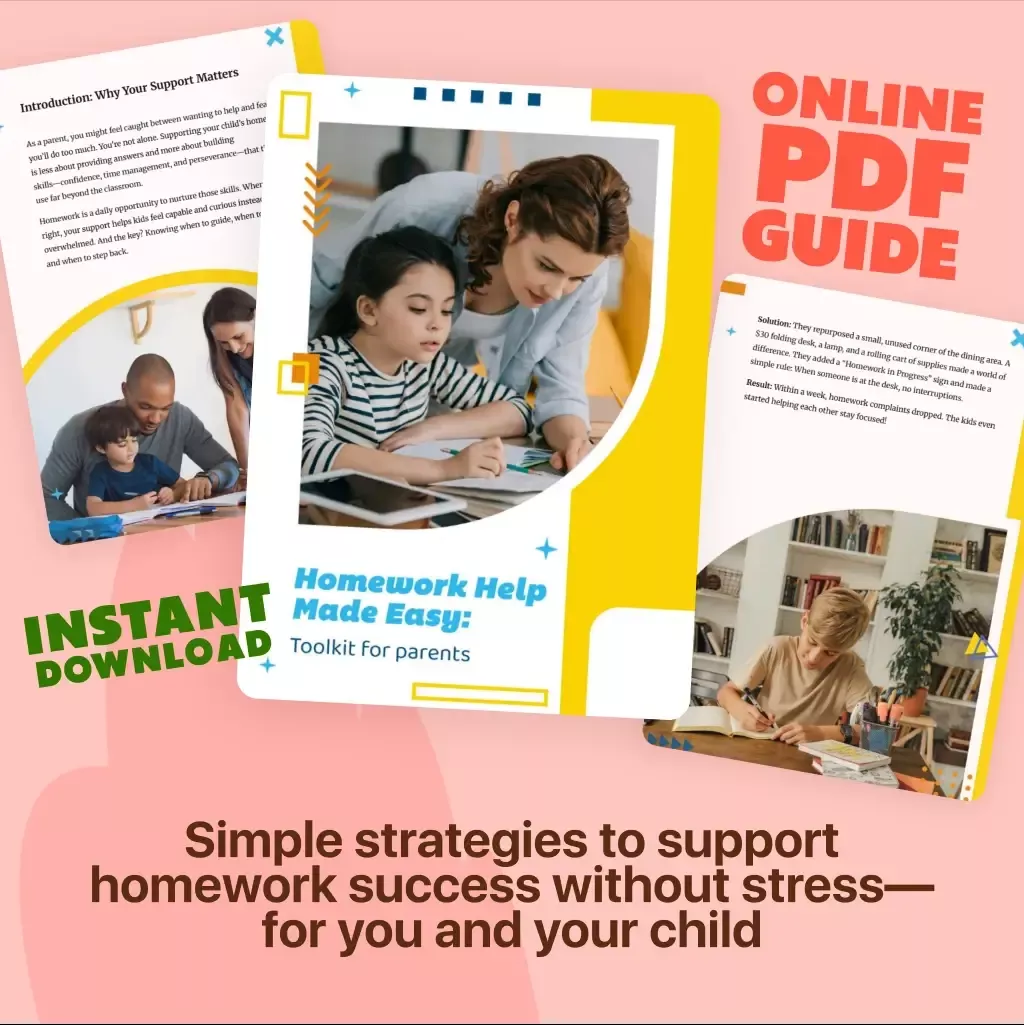
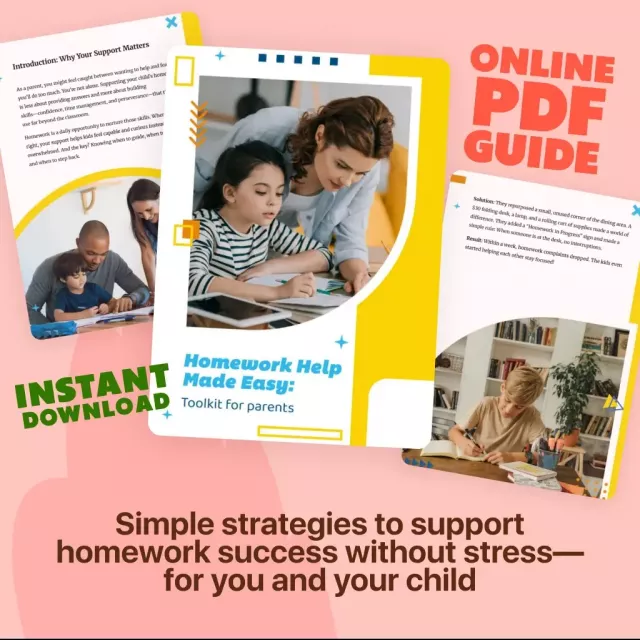
Make homework time smoother, more productive, and less stressful with the Homework Help Made Easy Toolkit for Parents. This digital guide is designed to give parents the tools, strategies, and confidence to support their child’s learning—without doing the work for them. Packed with practical tips, proven techniques, and ready-to-use prompts, it transforms homework from a daily battle into a learning opportunity that builds independence and academic success.
What’s Inside
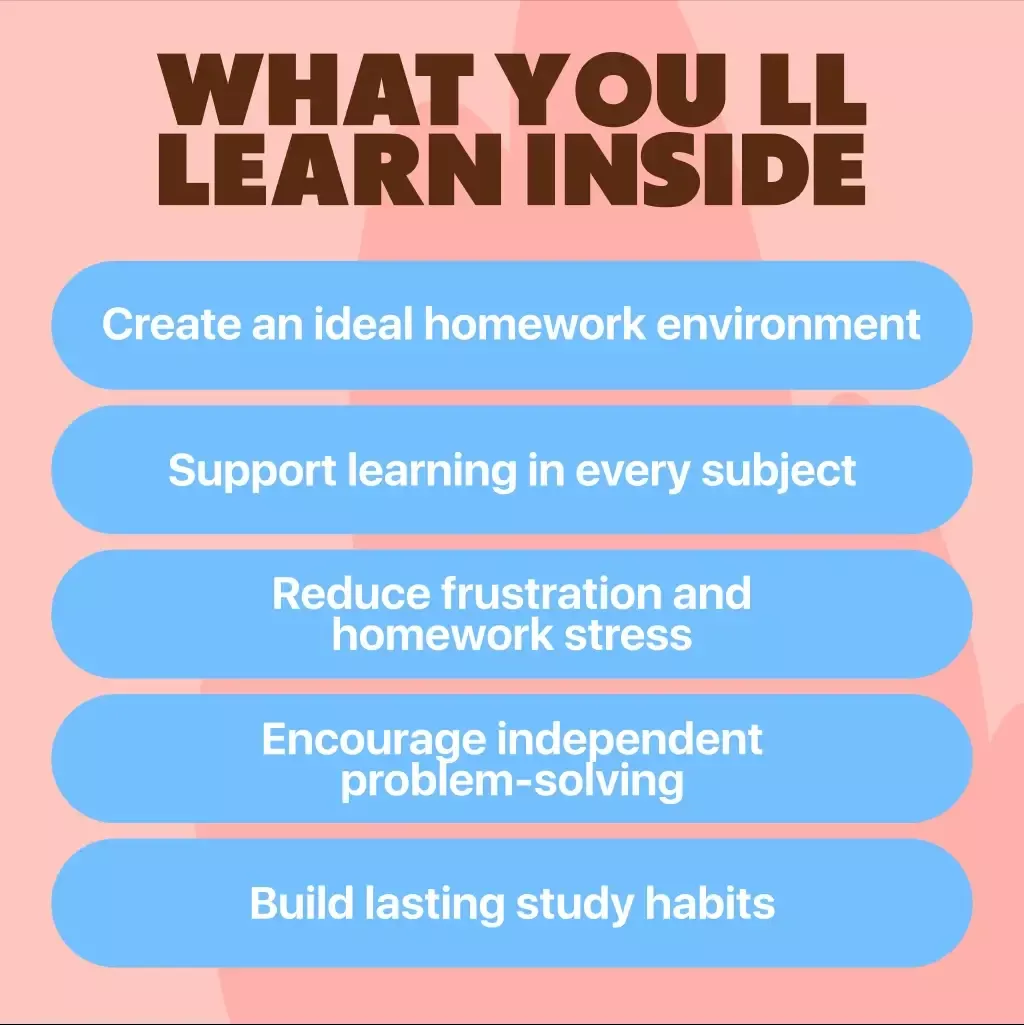
- Introduction: Why your support matters and the difference between helping and doing
- Creating the Perfect Homework Environment: Ideal study space setup, routines, and essential supplies
- Subject-by-Subject Strategies: Tailored tips for math, reading, writing, science, and history
- When Frustration Strikes: Troubleshooting stress, burnout, and stuck moments with calming techniques
- Building Independence: Growth mindset coaching, knowing when to step back, and goal-setting tools
Practical Benefits
- Create a focused, distraction-free homework environment
- Support your child in every major school subject
- Reduce homework-related stress and arguments
- Encourage independence and self-motivation
- Track progress and celebrate achievements
Why This Guide is Different
The Homework Help Made Easy Toolkit for Parents goes beyond generic tips by offering clear, step-by-step strategies and real-life examples. It’s parent-friendly, child-focused, and built to foster learning habits that last well beyond the school year. With practical tools like a weekly homework reflection template and conversation prompts, it bridges the gap between home and school while keeping your child engaged and confident.
Take Action
Turn homework from a daily struggle into a moment of growth. Download the Homework Help Made Easy Toolkit for Parents today and start building better study habits, stronger skills, and a happier homework routine for your child.
Order cancellation
All orders can be cancelled until they are shipped. If your order has been paid and you need to make a change or cancel an order, you must contact us within 12 hours. Once the packaging and shipping process has started, it can no longer be cancelled.
Refunds
Your satisfaction is our #1 priority. Therefore, you can request a refund or reshipment for ordered products if:
- If you did not receive the product within the guaranteed time( 45 days not including 2-5 day processing) you can request a refund or a reshipment.
- If you received the wrong item you can request a refund or a reshipment.
- If you do not want the product you’ve received you may request a refund but you must return the item at your expense and the item must be unused.
We do not issue the refund if:
- Your order did not arrive due to factors within your control (i.e. providing the wrong shipping address)
- Your order did not arrive due to exceptional circumstances outside the control of stellartrendnook.shop (i.e. not cleared by customs, delayed by a natural disaster).
- Other exceptional circumstances outside the control of https://stellartrendnook.shop
*You can submit refund requests within 15 days after the guaranteed period for delivery (45 days) has expired. You can do it by sending a message on Contact Us page
If you are approved for a refund, then your refund will be processed, and a credit will automatically be applied to your credit card or original method of payment, within 14 days.
Exchanges
If for any reason you would like to exchange your product, perhaps for a different size in clothing. You must contact us first and we will guide you through the steps.
Please do not send your purchase back to us unless we authorise you to do so.
Instant download
Your purchase will be available to download once payment is confirmed.
Instant download items don’t accept returns, exchanges or cancellations. Please contact us if you have any problems








As a parent, finding strategies that truly make a difference can sometimes feel like a challenge. However, this toolkit has proven to be a game-changer in helping my daughter develop better study habits. The guidance on how to create an environment conducive to focus and productivity has been particularly valuable. Since using it, I’ve noticed a significant improvement in her ability to stay on task and manage her time efficiently. The actionable tips are easy to follow and have made her approach to homework more independent, giving her a sense of accomplishment. It’s a simple yet powerful resource that has made a positive impact on both her learning and our daily routine
The tools provided are straightforward and easy to implement, making homework less stressful for both me and my child - win-win!
Nice guide
The suggestions in this guide have made independent learning possible for my children which is something I didn't think could happen so soon!
👍
This toolkit has given me the confidence to help my child with his homework without getting frustrated or overwhelmed 😊
I have to say, this toolkit has made a real difference for us. Ever since we started using it, our study routine at home has become much more structured and calm. 📚✨ What used to feel a little chaotic when it came to studying with my kids has now turned into something much more manageable—and even enjoyable. Before we had this, I often found myself repeating instructions or trying to come up with new ways to keep my little ones engaged. Now, they’ve developed their own rhythm. The strategies and resources inside this toolkit are simple, but they work. My kids have really embraced them, and it’s wonderful to see them learning more independently without needing me at every step. 🙌 What I appreciate most is how it makes studying less of a chore and more of an activity they actually look forward to. The methods encourage curiosity and give them a sense of responsibility for their own learning. Watching them sit down with confidence and tackle their work without hesitation has been incredibly rewarding. It’s also been a relief for me as a parent. Having a reliable system in place takes away a lot of the stress I used to feel about keeping up with their routines. Instead of constantly managing or motivating them, I can step back and enjoy seeing their progress unfold. That’s been a big shift for us as a family. I honestly don’t know how we managed before, but I do know we won’t be going back. This toolkit has become an essential part of our daily routine, and I can wholeheartedly recommend it to any parent looking to bring more consistency and independence into their children’s study habits. 🌟 All in all, it’s been a positive, practical, and confidence-building tool—for my kids and for me. And that’s something I truly value. 💡💖
Just got this toolkit for my kiddos, and wow! The strategies are so easy to follow and really help create effective study habits. My kids have started learning independently too!
Very helpful
I've seen such an improvement in my son's study habits since we started using these strategies. Homework isn't a struggle anymore, it's become part of our routine 😊
My daughter used to dread doing her homework but now she takes initiative thanks to this toolkit. Love seeing her learn on her own!
Ok
This printable guide has been incredibly helpful with establishing good study routines for my children, they're even starting to enjoy their studies!
If you’ve been having difficulty getting your child to stay consistent with their homework, you're not alone—and this resource could be just what you need. We were facing similar challenges, but after applying these strategies, we’ve seen a noticeable shift in how my child approaches schoolwork. The methods are practical and straightforward, making it easy to integrate them into our daily routine. Not only has my child become more consistent, but there’s also been a boost in confidence when it comes to tackling assignments. It’s truly been a positive change that has made homework time much smoother for both of us
🔥🔥🔥
Ever since we applied the techniques from this guide into our daily routine, I’ve noticed my kid being more proactive about his schoolwork – he’s not just studying harder but smarter as well 👏👏
Absolutely love how detailed yet simple the suggestions are; they’ve helped me assist my daughter effectively without any added stress or confusion.
highly recommended 👌
This guide has been a lifesaver for our family. Homework time is no longer a battle, thanks to the practical strategies provided.
I've seen such an improvement in my child's study habits since we started using these tips. Highly recommend it to all parents out there struggling with homework woes.
Finding resources that genuinely make a difference can be a bit of a treasure hunt, but this one definitely stands out. The printable guides offer a simple yet effective way to help children establish solid study habits. What’s truly impressive is how they’ve sparked a new sense of enthusiasm in my kids when it comes to their homework. They’re now approaching their tasks with a positive attitude, something I never thought would happen! The structure and clarity of the materials have helped make homework time less stressful, not only for them but for me too. It’s been a relief to see such a shift, and I’m genuinely grateful for how much smoother our routine has become
not bad
The step-by-step strategies in this guide have turned homework time into quality bonding time with my child, while also teaching them valuable skills for independent learning.
I was skeptical at first but wow, what a difference this has made! My kid is managing his own studies now and I couldn't be prouder.
I’ll be honest—there was a time when I thought homework might just be the thing that wore me down completely. 😅 My kids and their assignments never seemed to go hand in hand. Every evening turned into a struggle, and no matter how much we tried to encourage or remind them, it always felt like an uphill climb. Back then, homework time in our house meant tension, nagging, and plenty of frustration. The constant back-and-forth drained all of us, and what should have been a simple daily task became a dreaded routine. I remember thinking there had to be a better way, but nothing we tried seemed to stick. That’s why discovering these strategies has been such a relief. They’ve completely changed the way we approach homework. Instead of conflict and resistance, we now have a sense of order and calm. The methods are straightforward, yet surprisingly effective—they’ve made it easier for my kids to take responsibility while making the process less stressful for everyone. 🙌 What’s been most encouraging is seeing the shift in my kids’ attitudes. They’re more willing to sit down and get things done, and I no longer feel like I have to fight for every bit of progress. The evenings that used to be filled with arguments are now a lot smoother, and that change has lifted a huge weight off our family. It’s also helped us reconnect in a more positive way. Instead of clashing over schoolwork, we can actually share in the small wins, whether that’s finishing an assignment without stress or seeing their confidence grow when they understand something on their own. That part has been really rewarding. 🌟 So yes, homework time looks completely different for us now. I never imagined I’d be able to say this, but it’s no longer the dreaded part of our day. If your family is going through the same struggles we were, I’d definitely encourage you to give these strategies a try. They’ve made a big difference for us, and I think they could for you too. 💡📘
This isn't just another generic guide - you can tell it's been carefully designed with real-world parenting challenges in mind. And the results speak for themselves: less stress around homework and better grades!
❤️❤️❤️
Wow, this toolkit has been a lifesaver! The study habits and homework strategies have really helped my child become more independent in their learning. 👍
I'm so impressed with these printables for creating effective study habits. They've made homework time less stressful for both me and my son.
Very helpful
Thanks to this toolkit, our evenings are much smoother now. No more arguments over homework - the kids actually look forward to studying!
As a parent, finding the right tools to support my child's education has always been a priority, and this resource has been exactly what we needed. The approach it takes to encourage independent learning has been a game-changer for us. My child now feels more empowered to manage their own homework without relying on constant guidance. The strategies provided are not only practical but also easy to implement, making them ideal for busy families. I love how it helps develop a sense of responsibility, and it's been amazing to watch my child take ownership of their studies. It’s been a huge help in fostering better learning habits that will last
This printable guide has transformed our after-school routine. I never thought I'd see the day when my kids would handle their own studies without fussing.
👍
Love this toolkit! It's made homework time less stressful and more productive. My kid is forming great study habits now.
This guide has been a lifesaver. No more battles over homework, just effective strategies that work!
Easy to follow 👍
Can't recommend enough! This guide helped us create better study habits and routines for my child.
I’ll admit, I was a bit hesitant at first, but I’m so glad I gave this a try—it’s made a world of difference! The printable guide is packed with practical, easy-to-follow advice that’s been incredibly helpful in managing homework struggles. It’s not just a collection of tips, but a clear and structured approach that’s easy to implement. Since using it, my child has become more organized and self-sufficient with their assignments, and the frustration that used to come with homework has significantly decreased. It’s been a relief to see such positive changes, and I truly believe this resource has helped foster a better learning routine for both of us
🔥🔥🔥🔥
A must-have tool for every parent struggling with their kid’s homework. It teaches them how to study effectively too!
The best part of using this toolkit? Seeing my child become an independent learner without any fuss about doing their tasks.
Clear guidance
What a lifesaver! This toolkit has been so helpful in creating productive study habits for my kids. They're learning independently now, and I've got some time back to myself!
❤️
This printable guide is amazing! It's helped me set up a structured routine for my children's studies. Their grades have improved significantly.
I have to say, this guide has been a real help for us. My son used to really struggle with homework—every evening felt like a battle. There were frowns, frustration, and plenty of crumpled papers scattered around the table. It was tough watching him feel so discouraged and not knowing how best to support him. 😔 Then we came across this guide, and things started to change. The advice inside is practical and easy to follow. Nothing complicated or overwhelming—just clear strategies that actually make a difference. It’s almost like someone laid out a roadmap that finally made sense of what used to feel confusing and stressful. Now, instead of long evenings filled with sighs and arguments, we can open the guide together and find solutions quickly. It gives him the tools he needs to understand his assignments better, and it gives me peace of mind knowing I have something reliable to turn to when he gets stuck. 📘✨ The progress he’s made since using it has been encouraging. He’s gone from hesitating over simple tasks to tackling more challenging problems with confidence. It’s not just about getting the work done—it’s about the shift in his attitude. He’s prouder of his efforts, and I can see his confidence growing with each success. Another big change is how it’s impacted his self-esteem. Walking into class used to make him nervous, but now he goes in feeling prepared. That sense of readiness has spilled over into other parts of his school life too, which has been wonderful to watch as a parent. 🌟 If your child is having a hard time with homework and it feels like a constant struggle, I’d definitely recommend giving this guide a try. It has made our daily routine so much smoother and has helped turn homework into something manageable—and even positive. 🙌
The best part about this toolkit? My kids actually enjoy studying now! The methods it offers make learning fun and engaging.
I cannot stress enough how much this guide has transformed our evenings. Homework isn't a chore anymore, it's an opportunity for independent learning.
super informative
Highly recommended! If you want your child to develop good study habits early on, this is the tool you need.
The step-by-step techniques in this kit have made such a difference in our home school setup. We're seeing progress like never before!
What a lifesaver! This toolkit has been instrumental in helping my child develop effective study habits. The homework strategies are practical and easy to implement.
👍👍
I can't recommend this resource enough—it’s been a total game-changer for us! This printable guide is worth every penny, and it’s been a huge help in turning homework time around. My daughter now tackles her assignments with a level of independence I never expected, and the strategies laid out are both simple and effective. The step-by-step approach has made it easier for her to stay on track and focus, which has reduced the stress around homework for both of us. It’s a relief to see her so motivated and confident in managing her tasks, and I’m genuinely impressed by how quickly things have improved.
Love it! 😍 It's helped me create a structured study environment at home that promotes independent learning. Highly recommend!
Great tips 🔥
This toolkit has been a blessing for us parents who struggle with their kids' homework time. Now we have solid strategies to make it less stressful.
No more battles over homework at our house - thank you, Guide! The tips on creating good study habits have worked wonders.
🔥
If you're having trouble managing your child's homework time like I did, this toolkit can really help out. Love how they've simplified things!
I’m so glad I came across this toolkit—it’s been a real lifesaver for our family! Homework time has gone from a daily struggle to a much smoother, more manageable process. The study habits and strategies included in the guide are not only easy to implement but have truly helped my kids develop a stronger sense of responsibility. They’ve become more self-sufficient and motivated in their learning, which has been a huge relief. It’s amazing to see them take the initiative with their schoolwork, and I’m thrilled with how much easier and more enjoyable homework has become for all of us
well written
I've seen such a change since using this guide for my daughter’s studies. She has developed solid homework strategies that really work!
The printable guide has been a lifesaver! I can't believe how much it’s improved our evenings – no more battles over homework.
❤️❤️❤️
Such an easy-to-use tool, it's helped my child develop better learning strategies and tackle their assignments head-on.
We love using the toolkit - it's turned stressful nights of arguing into calm, productive study sessions. A total win-win situation! 😄
Love this toolkit! My kid's study habits have improved so much since we started using it. Homework time is no longer a battle, but a breeze. 🙌
Packed with value
I was skeptical at first, but now I'm impressed with the results of this toolkit on my kids' study habits. They're more focused and organized now.
👍
As a busy parent juggling multiple responsibilities, I was looking for something that wouldn't add more stress to my day—and this guide fits the bill perfectly. The simplicity and clarity of the approach make it incredibly easy to follow, even when you're already swamped with other duties. I’ve been able to implement the strategies without feeling overwhelmed, and it’s already made a noticeable difference in how my kids handle their homework. What’s more, the tips for fostering independence have been fantastic, helping my children become more confident and proactive in their studies. It’s definitely a win in our household, and I wholeheartedly recommend it! 👍
A must-have tool if you want your kids to develop good homework strategies without being overly dependent on you.
life changing!!!
With the help of these strategies, doing homework has become less stressful in our household – both for the kids and us parents!
This toolkit not only helps with studying techniques but also builds confidence in your child's ability to learn independently - truly priceless!
Finally, a guide that understands parents! This toolkit has been so helpful in creating study habits for my kids. No more last-minute cramming or forgotten assignments.
🔥🔥🔥🔥
I honestly can’t imagine our routine without this guide—it’s been such a relief! The strategies it offers are straightforward and easy to incorporate into our busy schedule, yet they’ve made a huge difference in how my kids approach their homework. What’s even better is that the results have been immediate. Homework time has gone from a source of stress and frustration to a much more peaceful and productive part of our day. The kids are now more engaged, and I feel like we’re all on the same page. It’s such a practical and effective resource for any parent looking to bring structure and ease to homework time
I've got three school-age kids and let me tell you, this toolkit makes life easier. Each one has different learning styles but they're all benefiting from these techniques.
The best part? Seeing my son take charge of his own learning process thanks to this kit. He’s not only completing his homework on time but also understanding it better.
Must read 🔥
I was skeptical at first but after seeing the changes in my kid's study habits, I'm sold! This is worth every penny spent.
If your household struggles with homework like ours did - get this guide ASAP! It’s transformed our evenings into peaceful study sessions instead of battles over books!
Absolutely love how practical these tips are – no complex theories or jargon here; just simple advice that works wonders for helping your child become an independent learner
Wow! This toolkit has been a lifesaver. I've seen my kid's study habits improve drastically, and they're even learning independently now!
❤️
I’ve been looking for ways to help my kids build better study habits, and this guide has been exactly what we needed. The advice it offers is clear, actionable, and easy to implement, making a big impact on how my children approach their schoolwork. Since using it, they’ve become much more self-reliant when it comes to completing their assignments, and I’ve noticed a significant improvement in their focus. It’s not just about getting the work done—it’s about empowering them to take charge of their own learning. I’m really impressed with how much more confident and responsible they’ve become, and I’m grateful for the positive changes it’s brought to our homework routine.
I found this printable guide extremely helpful in creating effective homework strategies for my children. Their grades have improved significantly.
We love how the toolkit encourages independent learning! It’s made our evenings so much smoother without constant supervision required during homework time 😊
Wow, this toolkit has been a lifesaver! It's helped me create effective study habits for my kids. Now they're learning independently and I'm less stressed! 😅
This guide is amazing. The homework strategies provided have made evenings so much smoother in our house.
Highly recommended
The tips on creating study habits from this guide are top-notch. My kid's grades have improved significantly since we started implementing them 🎉.
Never thought I'd see the day where my children would be excited about doing homework...but here we are thanks to these strategies!
This printable guide is fantastic! It’s helped us establish independent learning routines that work wonders.
If you're a parent looking to make homeschooling or homework help a little less overwhelming, this is the resource you need. It’s been a total game-changer for us, turning what was once a stressful daily routine into something much more manageable. The toolkit provides clear, practical strategies that are easy to follow and adapt to fit our needs. Whether it’s keeping the kids on track or helping them develop better study habits, it has made a noticeable difference. I’ve also found that it fosters a sense of independence in my children, which is something I’ve been hoping for. Overall, this has been an invaluable asset that I highly recommend for any parent!
👍👍👍
My favorite part of this guide? The advice on fostering independent learning - it's truly empowering for the kids!
This isn't just a tool for helping with homework, it’s an investment in your child’s future success 💯
Wow, this toolkit has been a lifesaver for me and my son! His study habits have improved so much since we started using it. Highly recommended for parents with young learners. 😊
Super informative 🔥
I was struggling to help my daughter become an independent learner, but this toolkit made it easy and fun!
After experimenting with various methods to improve my kids' study habits, I can confidently say this is the one that truly works. Unlike other resources we’ve tried in the past, this approach actually delivers results. The strategies are easy to follow and are tailored to help kids stay focused and organized, making a real difference in their daily routines. What really stands out, though, are the printable guides—they’re incredibly handy and make it simple to keep everything on track. Since incorporating these tips, homework time has become much more efficient, and my children have developed a better understanding of how to manage their tasks on their own. It’s been a refreshing and successful change!
🔥
This isn’t your typical “how-to” guide – it’s filled with actionable steps that lead to real results in creating good study habits.
If there's one thing I can say about this toolkit, it's that it delivers on its promises. My kids now handle their homework independently and efficiently!The simplicity of these printables is genius - they're straightforward yet effective in developing strong homework strategies.It didn't take long after starting with the guide for us to see improvements in our child’s learning autonomy. This is honestly worth every cent!Last but not least: the tips are quick & easy to implement which makes them perfect even for busy families like ours 🙌
What a lifesaver! This toolkit has transformed our homework routine. My kids are now creating study habits on their own and I'm seeing real progress.
I must say, this printable guide is pretty neat. It's helped my child develop independent learning skills which have been super beneficial!
Very helpful
Who knew homework could be so smooth?! The strategies in this guide have made evenings stress-free for us all.
If you're struggling with getting your kid to do homework, try this out! My kiddo loves the independence it offers and it's definitely improved his study habits.
No more tears during homework time thanks to this amazing tool kit! Creating effective study habits has never been easier 😊
❤️❤️❤️❤️
I was genuinely surprised by how much of an impact a simple printable guide could have on my children's learning. The shift toward independent learning seemed almost magical at first, but it’s all thanks to the well-organized strategies laid out in the guide. What I love most is that the methods are easy to incorporate into daily routines, making them manageable even on the busiest days. Watching my kids take charge of their homework with more confidence has been incredibly rewarding. It’s not just about completing assignments; they’ve become more self-sufficient and proactive in their learning overall. This resource has truly helped unlock their potential, and I couldn’t be happier with the results!
This isn't just a tool for parents but an asset for children too as they learn how to manage their studies independently 👍
Beyond happy with the results from using this toolkit - better study habits, less stress around homework and more independent learners at home!
Life changing 👍
This guide is just amazing. It took the stress out of homework time and made it productive instead. Highly recommend for parents struggling with their kid's homework.
The printable guide provided some really useful strategies for tackling homework. We've seen an improvement in our daughter's grades already 😊
ok 👍
We used to dread homework time, but not anymore thanks to this guide. The step-by-step instructions are easy to follow and effective.
Our evenings have completely turned around since we started using this resource. Gone are the days of battling over unfinished assignments and the constant reminders to get things done. The strategies in this guide have helped create a more organized and calm homework routine for our family. What’s even more exciting is that our kids are now taking the initiative to start their tasks on their own without needing any prompting from us. It’s a huge relief to see them becoming more responsible and independent with their schoolwork. The transformation has been noticeable, and I couldn’t be more grateful for the positive impact this toolkit has had on our daily routine! 🙌
Love this toolkit! It's helped create great study habits for my kids. They're more focused and independent with their homework now.
👍
Can't believe how much easier this has made our evenings. My son actually looks forward to doing his homework now!
I was skeptical at first, but the results speak for themselves. My daughter's grades have improved since we started using these strategies.
Not bad
This guide is amazing! I've seen a significant improvement in my child's attitude towards studying. Highly recommended!