A Simple Homework Routine Kids Actually Stick With
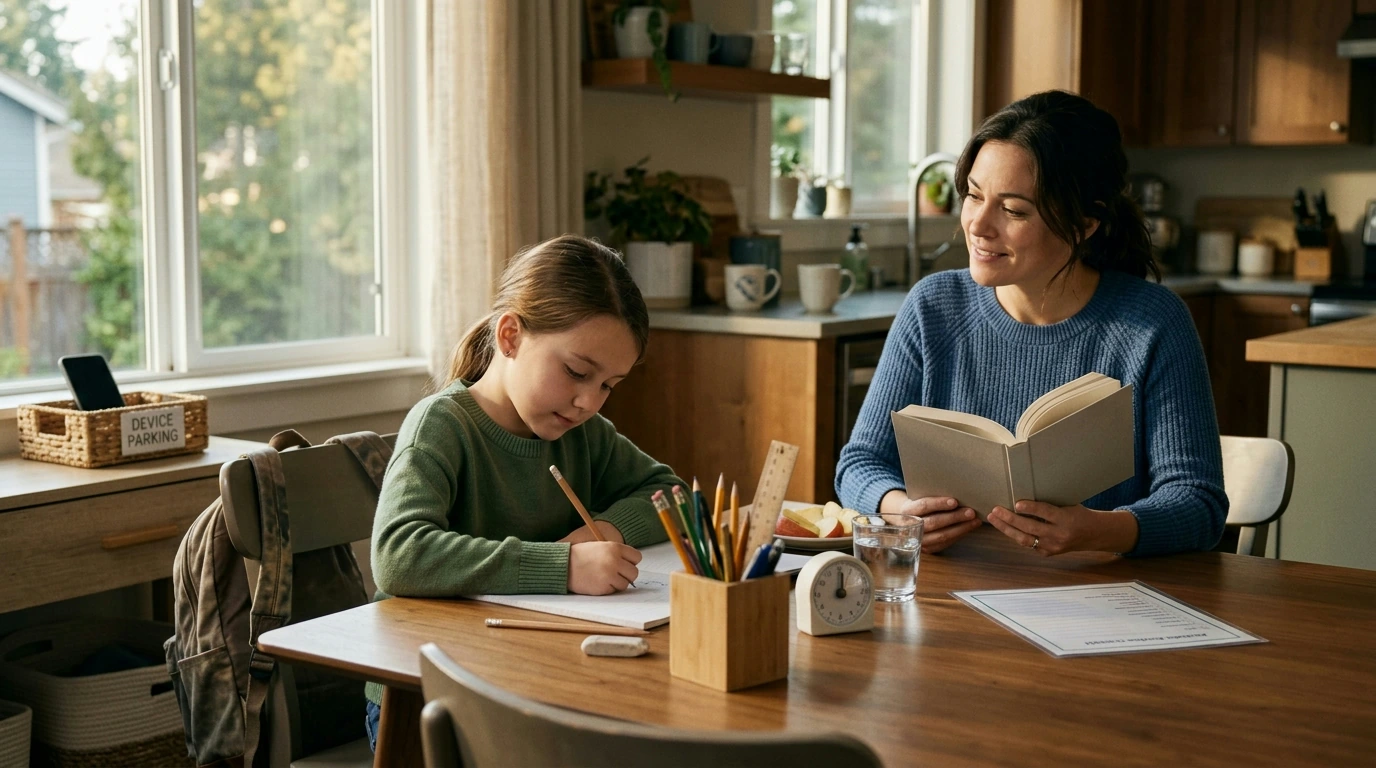
How can parents set up a simple homework routine that kids will actually follow?
A routine works when it’s easy to start, predictable, and leaves kids feeling capable—not trapped. Keep the system simple: same time cue, same place, and a short list of steps your child can repeat every school day.
1) Pick a consistent “start signal,” not a perfect time
Instead of chasing an exact hour, anchor homework to something that already happens daily (snack, unpacking the backpack, or a quick reset after school). A reliable cue reduces negotiations and helps kids switch gears faster.
2) Create a distraction-light homework zone
Choose one spot with supplies ready: pencils, paper, charger, calculator, and a timer. Keep the phone and non-homework tabs out of reach. When the environment does the reminding, parents don’t have to.
3) Use a short “plan first” checklist
Before starting, have your child write: (1) what’s due tomorrow, (2) the first task to begin, and (3) one question to ask if they get stuck. This prevents the common loop of staring at the page and waiting for help.
4) Work in small sprints with a visible finish line
Try 10–20 minutes of focused work, then a 3–5 minute break. Aim for progress, not perfection. Kids follow routines better when they can see the end coming and know breaks are guaranteed.
5) Define the parent role ahead of time
Agree on a simple rule like “You try for 5 minutes, then you can ask.” Offer guidance (clarify directions, check one problem, quiz with flashcards) without taking over. For more practical tools and examples, see the full guide here: homework help made easy parent toolkit.
For A Simple Homework Routine Kids Actually Stick With, the best answer depends on fit, material, care instructions, and how the product will be used day to day.
FAQ
What should I do if my child refuses to start homework?
Lower the starting barrier: ask them to do just the first two minutes or the first problem. Pair it with a consistent cue and a quick choice (“math first or reading first?”) so they feel some control without changing the expectation.








Leave a comment