

Travel Smarter, Connect Deeper, and Avoid Cultural Missteps
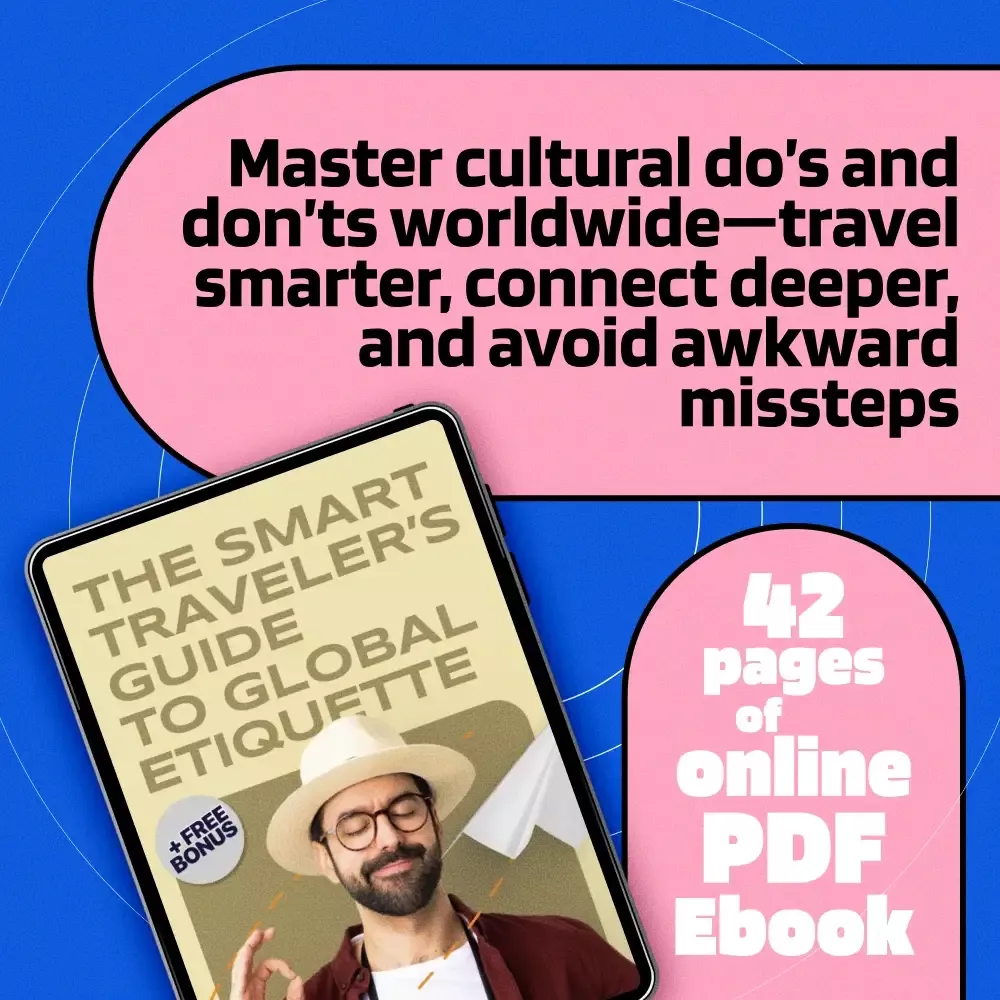
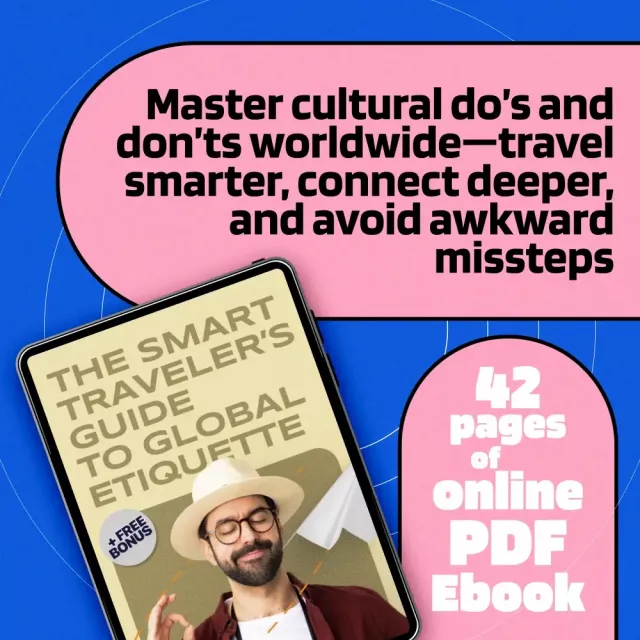
Every destination comes with its own set of unspoken rules—what’s polite in one country could be awkward or even offensive in another. With The Smart Traveler’s Guide to Global Etiquette, you’ll have a trusted companion for navigating cultural norms with confidence. Whether you’re exploring for business, leisure, or study abroad, this digital download equips you with essential etiquette tips, country-specific insights, and practical tools to help you make meaningful, respectful connections around the world.
What’s Inside This Digital Travel Etiquette eBook?
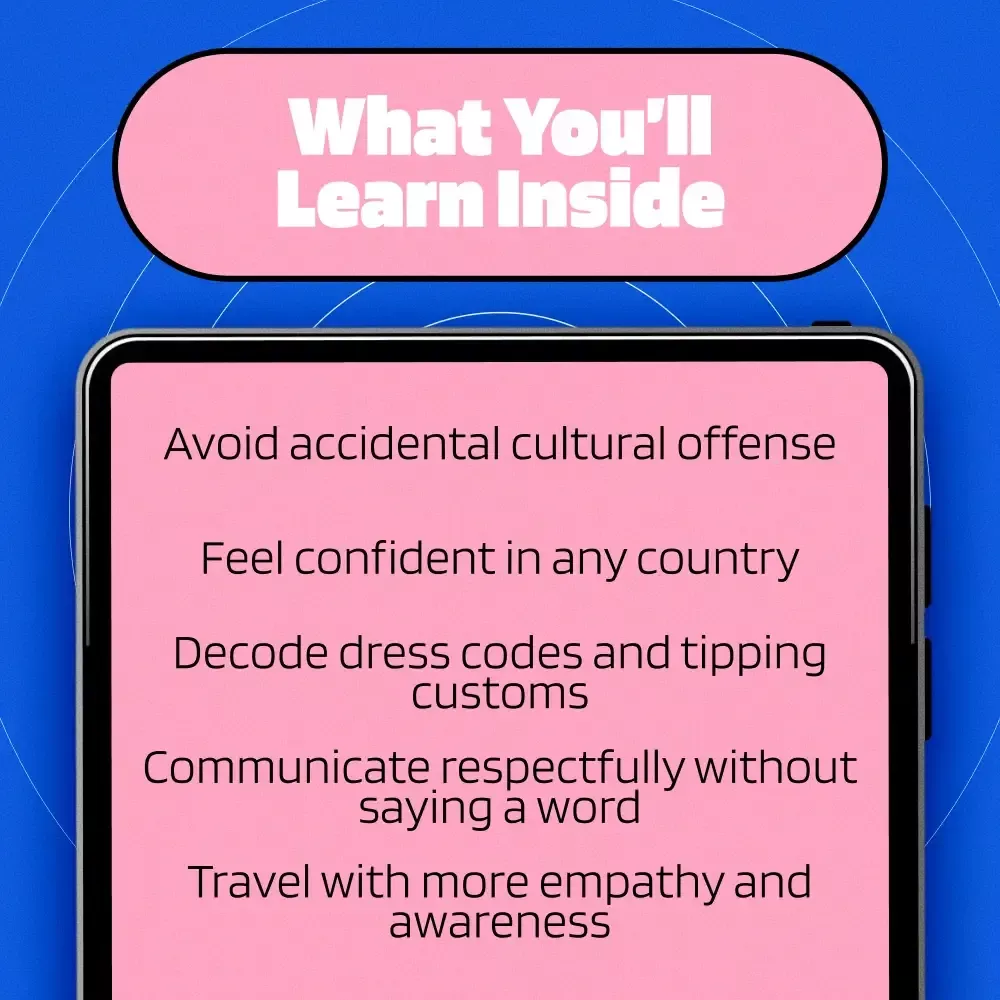
- 8 comprehensive chapters covering greetings, dress codes, tipping, gestures, and social norms
- Country-by-country etiquette guides for Japan, Brazil, Germany, India, and Egypt
- Case studies and real-life examples of cultural blunders and how to recover gracefully
- Packing and clothing checklists to match local expectations
- Tips for asking locals about etiquette without sounding rude
- Quick reference prompts for pre-trip cultural research
Benefits You’ll Gain
- Avoid common cultural faux pas
- Build trust and respect with locals
- Travel with confidence in unfamiliar settings
- Understand gestures, body language, and personal space rules
- Adapt quickly to different customs and traditions
Who Is This For?
This eBook is ideal for international travelers, study abroad students, digital nomads, business professionals, and anyone who wants to explore the world without accidentally offending locals. It’s designed for both first-time explorers and seasoned globetrotters who value cultural respect as much as they value adventure.
What Makes It Different?
Unlike generic travel tips, The Smart Traveler’s Guide to Global Etiquette goes beyond surface-level advice. It blends practical how-to guidance with real-world stories, giving you the confidence to handle any cultural scenario with ease. You’ll learn not just what to do—but why it matters—helping you travel as a true global citizen.
Start Your Journey the Right Way
Download The Smart Traveler’s Guide to Global Etiquette today and make your next trip smoother, friendlier, and more culturally rewarding. The difference between being a tourist and a respected traveler starts with understanding—and now you can carry that knowledge with you anywhere in the world.
Order cancellation
All orders can be cancelled until they are shipped. If your order has been paid and you need to make a change or cancel an order, you must contact us within 12 hours. Once the packaging and shipping process has started, it can no longer be cancelled.
Refunds
Your satisfaction is our #1 priority. Therefore, you can request a refund or reshipment for ordered products if:
- If you did not receive the product within the guaranteed time( 45 days not including 2-5 day processing) you can request a refund or a reshipment.
- If you received the wrong item you can request a refund or a reshipment.
- If you do not want the product you’ve received you may request a refund but you must return the item at your expense and the item must be unused.
We do not issue the refund if:
- Your order did not arrive due to factors within your control (i.e. providing the wrong shipping address)
- Your order did not arrive due to exceptional circumstances outside the control of stellartrendnook.shop (i.e. not cleared by customs, delayed by a natural disaster).
- Other exceptional circumstances outside the control of https://stellartrendnook.shop
*You can submit refund requests within 15 days after the guaranteed period for delivery (45 days) has expired. You can do it by sending a message on Contact Us page
If you are approved for a refund, then your refund will be processed, and a credit will automatically be applied to your credit card or original method of payment, within 14 days.
Exchanges
If for any reason you would like to exchange your product, perhaps for a different size in clothing. You must contact us first and we will guide you through the steps.
Please do not send your purchase back to us unless we authorise you to do so.
Instant download
Your purchase will be available to download once payment is confirmed.
Instant download items don’t accept returns, exchanges or cancellations. Please contact us if you have any problems








This eBook is a genuinely valuable resource for anyone who enjoys exploring new places and wants to engage with other cultures in a respectful and thoughtful way. Traveling to unfamiliar countries can sometimes lead to accidental social slip-ups—we’ve all experienced moments like that—but this guide has really helped me feel more prepared and aware of how to navigate those situations. It functions as a practical etiquette guide for global travel, covering a wide range of customs and traditions in a clear, approachable way. The chapters are full of useful advice on how to avoid common cultural missteps, and that’s made it much easier for me to feel comfortable and more at ease in new environments. It's not just about avoiding mistakes—it’s about building a better connection with the people and places you visit. What I especially appreciate is that the book doesn’t just tell you what to do or avoid; it also explains how to engage with locals in a respectful and curious way. It offers guidance on how to ask questions about customs or participate in traditions without overstepping boundaries or coming across as intrusive. That kind of advice can be hard to find, and it’s something I’ve found incredibly useful. There have been plenty of times during my travels when I wasn’t sure how to ask about local practices without feeling awkward or worried about offending someone. This book gave me the tools and the confidence to have those conversations, and it’s made my travel experiences more open, engaging, and enjoyable. If you're looking to move beyond surface-level tourism and really connect with the places you visit, this eBook is well worth reading. It’s helped me approach travel in a more thoughtful way, and it’s turned what could have been uncomfortable or isolating moments into meaningful exchanges. I’d recommend it to anyone who wants their travel to be not just smoother, but also more rewarding on a human level 🤗
Traveling to new destinations can sometimes feel like stepping into the unknown, but this eBook was like a roadmap to navigating the complexities of different cultures. Full of insightful and practical advice, it helped me embrace each journey with confidence. The country-specific tips were especially valuable, providing a deeper understanding of local customs. In Egypt, for example, I felt like a true global citizen, armed with knowledge that made my experience even more rewarding. This guide truly transformed how I approached international travel, making it easier to connect with people and avoid common cultural missteps. If you’re looking to enhance your travel experience, this resource is a must-have!
🔥🔥🔥🔥
The real-life examples of cultural missteps are both entertaining and educational - I've learned how to recover gracefully from any faux pas while traveling.
Downloaded this guide for my trip to Japan and it was a lifesaver! No more awkward moments or cultural blunders. Really helped me connect with the locals on a deeper level.
Ok
The packing checklists are genius! They really helped me match local expectations during my business travels in India, boosting my confidence immensely.
Asking about etiquette without sounding rude can be tricky, but the quick reference prompts provided here have been super helpful during pre-trip research 😊
If you’ve ever felt uncertain about how to navigate unfamiliar customs while traveling, this guide is an absolute game-changer. It's truly a must-have for any traveler looking to make the most of their trips. This resource has saved me from countless awkward situations by providing clear, practical advice on how to approach various cultural norms. I especially appreciated the country-specific tips – they made all the difference, particularly when I traveled to places like Japan and Brazil. Understanding the subtleties of each culture, from the importance of bowing in Japan to the friendly nature of greetings in Brazil, allowed me to connect with locals in a way that felt respectful and natural. This guide goes beyond surface-level advice, offering in-depth insights that made me feel more confident and prepared for every destination. If you want to make your travels smoother and more enjoyable, this is definitely worth having by your side.
excellent
This digital download is packed with practical tools that have made my international travels so much easier. I've been able to connect deeper with locals and avoid cultural missteps thanks to this guide.
The case studies of real-life cultural blunders are both entertaining and enlightening! They're great examples of how easy it can be to offend without realizing it...and how to recover gracefully when you do.
❤️
This isn’t your generic travel advice book; it goes beyond surface-level guidance by blending practicality with real-world stories. Now I feel confident handling any cultural scenario thrown at me 😎
As a business professional who often travels internationally, building trust & respect with locals is crucial - this ebook helps achieve exactly that! Plus, adapting quickly to different customs & traditions becomes a breeze 🌏
Amazing guide
When it comes to navigating different cultures, this eBook is an absolute gem. Packed with valuable insights into cultural norms, it's a treasure trove of knowledge that every traveler can benefit from. I only wish I had it during my time studying abroad in Japan – it would have helped me avoid some of those awkward moments and misunderstandings that come with adapting to a new culture. Thankfully, I now have it for my upcoming travels, and I can already tell it’s going to be a game-changer. The country-specific tips are incredibly detailed, offering everything from basic etiquette to more nuanced cultural practices. I feel much more prepared to immerse myself in future destinations with respect and confidence. Whether you’re traveling for leisure or business, this guide is an essential companion to help you navigate the world with ease.
👍👍👍👍
The packing checklists came in handy during my recent business trip to Brazil. They helped me match local expectations with ease, avoiding any awkward situations.
As an international traveler who values respect as much as adventure, this guide is a must-have! It has helped me build trust with locals by avoiding common faux pas.
Not bad
This isn't just another travel tip book—it's a comprehensive tool that teaches you why certain actions matter in different cultures. Finally understanding these nuances makes traveling so much more rewarding!
As a student currently studying abroad, I’ve found this digital guide to be an incredibly useful companion! 🤩 It’s helped me navigate the often subtle and sometimes confusing landscape of cultural expectations in a way that feels approachable and reassuring. What really stands out to me is just how thorough it is—it covers everything from basic greetings and dress codes to tipping customs and everyday social etiquette. Rather than simply listing do’s and don’ts, the guide takes the time to explore the context behind these cultural practices. That extra layer of explanation has made a real difference. It’s one thing to know what’s expected, but understanding why it matters in a particular culture has helped me engage more respectfully and confidently in new environments. There’s something really empowering about knowing not just how to behave appropriately, but also being able to appreciate the values and perspectives that shape those behaviors. It makes the whole experience of being abroad feel less overwhelming and more meaningful. Instead of worrying about unintentionally offending someone, I’ve found myself becoming more open and curious about the customs I encounter. This approach has made my time abroad richer on a personal level. I’m not just observing different cultures—I’m participating in them with greater awareness. And that’s not something I would’ve expected from a downloadable resource. It’s helped turn what could’ve just been a series of trips or academic terms into a more connected, thoughtful journey. What I appreciate most is that the guide isn’t about memorizing rules or trying to “get it right” all the time. It emphasizes learning through context and building real understanding, which has genuinely deepened the way I experience each new place I visit. If you're planning to study abroad or travel extensively, I’d absolutely recommend giving this a read. It’s been a steady source of guidance, and I think others would find it just as helpful
This guide is a lifesaver! I avoided so many cultural blunders during my trip to Japan. The country-specific insights were spot-on.
Travelling for business can be stressful, but this ebook made it easier. Now I feel confident while interacting with locals in different countries.
🔥
I love the practical tools provided! They helped me adapt quickly to different customs and traditions - definitely made my trips smoother and friendlier!
Used this guide on my study abroad journey, it was incredibly helpful in understanding gestures, body language, and personal space rules of other cultures.
Super helpful 🔥
I’ve got to say, this guide really takes the guesswork out of traveling. The packing checklists, tailored to local expectations, were incredibly helpful – I no longer have to wonder if I’m packing the right clothes for different cultures. It’s such a relief to know what attire is expected and appropriate for each destination. Whether it’s dressing modestly for certain religious sites or understanding the formality of business attire in different countries, these tips made packing stress-free and efficient. I especially appreciated the practical approach, which meant I could focus on the experience of travel instead of worrying about fitting in. This resource truly made my preparations easier and gave me the confidence that I was ready for whatever cultural nuances I would encounter on my journey
The quick reference prompts for pre-trip research? A godsend for first-time explorers like myself who want to travel respectfully without accidentally offending locals
❤️❤️❤️
The case studies in the book were a real eye-opener 😲 Learned so much from others' mistakes, now I can recover gracefully if anything goes wrong.
This is not just another travel guide. The country-specific insights are incredibly useful, especially for places like Japan and Brazil 🌎
Awesome
I'm studying abroad next semester - this ebook was perfect for me! Also loved the quick reference prompts for pre-trip research 👍
Packing checklists matched to local expectations? Yes please! No more awkward moments when you're underdressed or overdressed.
👍
I found the advice on customs and etiquette to be incredibly eye-opening, making it easier for me to navigate social situations with confidence. Whether you're visiting a bustling city or a quiet village, the guide provides the kind of cultural awareness that fosters genuine interactions. It’s a resource that ensures you won't just be a visitor, but someone who truly understands and appreciates the places you visit. If you value authentic travel experiences, you absolutely won’t regret having this guide by your side!
Just finished reading this guide and I absolutely loved it! The cultural insights for each country were so detailed. Made my trip to Japan smoother than ever before. 😊
Highly recommended
I used this eBook while studying abroad in Germany, and it was incredibly helpful. Understanding the local etiquette made me feel more at home.
If you want to connect deeper with locals when traveling, get this guide. It’s like having a cultural compass in your pocket!
The case studies are great - they show common blunders and how to recover gracefully. Really puts things into perspective.
🔥🔥🔥
This guide goes far beyond the typical travel etiquette advice—it dives deep into the reasons behind cultural customs, helping you truly understand what makes them important. It’s one thing to know what to do or not do, but this resource helps you grasp why these traditions exist, which enhances the entire travel experience. Instead of feeling like a tourist, I felt like a real global citizen, navigating new environments with respect and awareness. It encourages a deeper level of connection with the places you visit, making your travels not only smoother but also more meaningful. Whether you're engaging with locals or simply absorbing the culture, this guide gives you the tools to build a genuine understanding of the world around you. It’s an invaluable companion for anyone looking to truly immerse themselves in their travels.
The packing checklists are super handy - no more guessing what's appropriate attire in different countries! 👍
Super informative 🔥
This ebook is a lifesaver for international travel. It's easy to read and packed with practical advice - made my business trips so much smoother!
The real-life examples of etiquette mishaps had me laughing out loud, but also taught me how to recover gracefully from any faux pas I might make myself.
❤️
As a digital nomad, I’m always on the move and constantly adjusting to new cultures. The quick reference prompts in this guide have become an invaluable tool for my pre-trip research into local customs and traditions. They’ve made it so much easier to understand the specific etiquette for each place I visit, helping me avoid awkward situations and show respect to locals right from the start. Instead of scrambling to learn everything last minute, I can now quickly get the key insights I need to navigate different cultures confidently. Whether it’s knowing how to greet people or understanding dining etiquette, this guide ensures that I’m always prepared. It’s a must-have resource for anyone who values respectful, thoughtful travel and wants to connect with people around the world on a deeper level.
The section on understanding body language across cultures was eye-opening! Really deepened my connections with locals during my travels.
Very helpful
Packing has always been one of the most stressful parts of preparing for a trip, but this guide completely changed that. The clothing checklists it offers are a game-changer, taking all the guesswork out of what to pack. Now, instead of worrying about whether I have the right attire for every occasion, I feel totally prepared. The checklists are not only practical but tailored to specific countries and their cultural expectations, which means I’m always confident I’m dressing appropriately. I’ve already noticed how much smoother my travel preparations have been, and I feel much more at ease heading out the door. This resource has made traveling smarter, more efficient, and way less stressful!
What a fantastic resource for understanding cultural norms! It helped me avoid so many potential faux pas on my recent trip to Japan. The tips on body language and personal space were particularly useful.
👍👍👍👍
This eBook is more than just travel advice—it's a tool for connecting deeper with people from different cultures. After reading it, I felt confident navigating social situations during my business trip to Brazil.
The country-specific insights provided by this guide made my vacation in Egypt feel much richer and rewarding—I was able to understand local customs better and respect them accordingly.
Life changing 👍
Avoiding cultural missteps has never been easier thanks to this handy eBook! Whether you're traveling for leisure or work, knowing how not to offend locals is crucial—and that’s where it shines.
From greetings to tipping—this digital download covers all aspects of global etiquette comprehensively. It's like having a trusted companion guiding you through unfamiliar settings around the world 🌎
🔥
I just wrapped up reading this guide before my trip to Japan, and I’m so glad I did! The etiquette tips it provided were incredibly insightful and helped me avoid potential awkward situations. From knowing the proper way to greet people to understanding dining customs, these tips made me feel so much more confident navigating the culture. It was like having a local friend guiding me through all the unspoken rules. The advice wasn’t just practical, but also gave me a deeper appreciation for Japanese culture. If you're planning to travel abroad, this guide is an absolute must-read—it’s a game-changer for making your trip more enjoyable and respectful.
This eBook is an absolute lifesaver! Made my business trip to Germany so much smoother, I understood the local customs better and managed to avoid cultural faux pas.
I've always been nervous about offending locals when I travel but not anymore! This guide has boosted my confidence in navigating different cultures with ease. 👍
Clear guidance
ok
If you travel frequently—whether for business or leisure—The Smart Traveler’s Guide to Global Etiquette is a resource well worth having!!! 💯 As someone who’s spent a fair amount of time abroad, I’ve found this guide incredibly useful in navigating the subtleties of different cultural norms around the world. It’s not just about what to do or not do; it helps you understand the “why” behind certain customs, which can make a big difference in how you're received. One of the biggest challenges while traveling internationally is adapting to those unspoken social rules that locals just seem to know instinctively. They’re rarely written down, yet failing to follow them can easily lead to awkward situations or even unintended offense. This book helps bridge that gap in a thoughtful and approachable way. What really sets this guide apart is how it uses real-world examples to show common missteps travelers make—and more importantly, how to recover gracefully. That kind of insight goes beyond generic advice. It helps you stay respectful and adaptable, even when you make a mistake. And let’s face it, when you’re in unfamiliar territory, those moments are bound to happen. I also appreciated the practical tools included in the guide. The packing lists tailored for different countries are a great touch. They take into account not only climate, but also local expectations around dress and presentation—something that’s often overlooked but can matter quite a lot, especially in professional settings or more conservative cultures. Another feature worth mentioning is how accessible the writing is. The tone is informative without being dry, and it never talks down to the reader. Whether you’re a first-time traveler or someone who’s been crossing borders for years, the book meets you where you are. It’s clear the authors have done their homework and genuinely care about helping people travel respectfully and confidently. Overall, I’d recommend The Smart Traveler’s Guide to Global Etiquette to anyone who wants to make their travel experiences smoother, more respectful, and more enriching. It’s not flashy or gimmicky—it’s just solid, practical advice delivered in a way that’s easy to absorb and put into action. Definitely a worthwhile addition to any traveler’s bag
The real-life examples of cultural blunders were both entertaining and enlightening - made me realize how important understanding etiquette can be while traveling.
This isn't just another travel guide; it teaches you why certain behaviors matter in different cultures which makes all the difference when you're trying to build trust with locals 😊
❤️❤️❤️
Just finished reading this digital guide and it's a must for anyone traveling abroad. It helped me avoid embarrassing cultural blunders, and I felt more confident interacting with locals!
I’m absolutely loving the country-specific insights in this guide! The etiquette tips for places like Japan, Brazil, Germany, India, and Egypt are spot on and have been incredibly helpful. I now feel more prepared and confident when it comes to respecting local customs and traditions. Each section offers practical, easy-to-follow advice that makes traveling smarter and smoother, without the worry of unintentionally offending anyone. The detailed breakdowns of cultural norms have already helped me plan better for my upcoming trips. It’s reassuring to know I’ll be able to immerse myself in these cultures without missing a beat, making my travels both more respectful and enjoyable.
Must read
The case studies of real-life cultural mistakes were eye-opening 😱. They really showed how easily one could commit a faux pas unintentionally in unfamiliar settings.
I'm studying abroad next semester and found the tips on gestures, body language and personal space rules incredibly beneficial. Can't wait to connect deeper with my new classmates overseas
👍
As a digital nomad constantly moving countries, adapting quickly to different customs is crucial. This guide makes it easy by explaining not just what but why certain manners matter – love it ❤️!
This isn’t your typical travel advice; it goes beyond surface-level tips. After reading this eBook, I feel ready to handle any cultural scenario thrown at me during my travels 👏🌎.
Informative
I used to feel nervous about unintentionally offending locals while traveling, especially when it came to gestures and body language. But this guide completely changed that for me! It breaks down the cultural nuances in such an easy-to-understand way, helping me feel more at ease when interacting with people from different backgrounds. I now know exactly what gestures are appropriate and which ones to avoid, which has made a huge difference in my travels. The practical tips provided give me the confidence to engage with locals respectfully, making my travel experiences not just smoother but also much more enjoyable. With this guide, I can explore new places without worrying about stepping on any cultural toes!
This digital guide is a lifesaver. It's not just about what to do, but why it matters - that's really unique! Plus, the country-specific insights are super helpful.
The packing checklists matched to local expectations were incredibly useful during my trip to Germany. This guide really helps you adapt quickly in unfamiliar settings.
🔥🔥🔥🔥
Loved how comprehensive this guide is - from greetings to tipping etiquette, it covers everything you need for smart traveling.
Just finished my first trip using this guide and wow, what a difference! I felt so confident navigating unfamiliar customs. The case studies were particularly helpful for understanding why certain behaviors are important.
This guide is like having a local friend in your pocket. It helped me connect with people on a deeper level during my travels. The quick reference prompts were super handy for pre-trip research!
Helpful
I picked up this guide before a business trip to Japan, and I can honestly say it was invaluable. It helped me navigate the local etiquette with ease, allowing me to build trust and respect with the locals right from the start. The section on greetings was particularly detailed and insightful, making me feel confident when interacting with people in professional settings. Understanding the nuances of how to greet someone properly, bowing appropriately, and exchanging business cards the right way all played a huge role in forming positive connections. This guide really gave me an edge by ensuring I respected cultural norms, which in turn made my trip more successful and enjoyable. If you're heading to a new country for business or leisure, this resource is a must-have!
ok
As someone who values cultural respect when travelling, this guide hit the spot perfectly. Loved how it includes dress codes and tipping advice—helped avoid awkward moments while exploring new places.
The practical tools in this digital download are great for adapting quickly to different traditions around the world. Plus, tips on asking locals about etiquette without sounding rude? Absolute lifesaver!
❤️
If you're looking for more than surface-level travel tips, get this eBook now! It doesn’t only tell you what to do but explains why it matters—making every journey smoother, friendlier & more culturally rewarding.
Truly a lifesaver for the global traveler! The etiquette tips and country-specific insights helped me avoid awkward situations on my recent trip to Japan. 🙏
This guide is so practical, it's like having a local friend in every country. Avoided numerous cultural faux pas in Brazil thanks to this.
Empowering 💪
The real-life examples of cultural blunders are both entertaining and enlightening! It’s made me aware of gestures that could be offensive in other cultures—so helpful!
This isn’t just your typical travel guide—it's a deep dive into the “why” behind different customs, making it so much more valuable. Rather than just telling you what to do or not do, it explains the cultural significance behind various traditions, which has given me a much richer understanding of the places I visit. The section on Indian traditions, in particular, really stood out to me; it helped me grasp the meaning behind practices I’d seen but never fully understood before. This guide has opened my eyes to the complexities of culture, making me appreciate the customs I encounter on a deeper level. If you’re looking to connect more meaningfully with the places you visit and truly understand their traditions, this guide is an essential resource.
👍👍👍
Asking locals about etiquette can be tricky but with the pre-trip research prompts from this guide, it was easy peasy lemon squeezy 😎
If you want to build trust with locals while traveling and adapt quickly to different customs, get your hands on this digital download ASAP—you won't regret it!
Insightful
This ebook is a lifesaver for any international traveler. I've been able to build trust and respect with locals thanks to the country-specific insights.
I'm studying abroad in Germany, and this digital download has made adapting to different customs and traditions a breeze!
not bad
As a digital nomad, traveling confidently in unfamiliar settings is crucial. This guide provides that confidence by equipping you with essential etiquette tips.
Packing used to feel like a daunting task, but now it’s a breeze thanks to the clothing checklists provided in this guide. The checklists are perfectly tailored to local expectations, so I no longer have to second-guess whether I’m dressing appropriately for different destinations. From understanding the appropriate attire for formal events to casual outings, it’s made my travel prep so much easier. The best part? I feel confident that I’m respecting local customs with every outfit I pack. This guide has truly taken the stress out of packing, and I’m already looking forward to my next trip knowing I’m fully prepared. A big thumbs up from me! 👍
🔥
Loved the real-life examples and quick reference tips—they really bring the advice to life. My only suggestion would be to add more visuals or infographics for easier scanning. That said, I’m really happy I downloaded it! 🎯
Beyond doubt, the best part about this guide? The quick reference prompts for pre-trip cultural research. Makes planning my next trip smoother and more culturally rewarding!
very practical
The packing and clothing checklists are a lifesaver. Thanks to this guide, I knew exactly what to wear in Egypt without offending the locals.
This travel etiquette ebook is amazing! It's so much more than just tips - it provides real-world examples of blunders and how to recover from them gracefully.
❤️❤️❤️
As I prepare for my semester abroad in Germany, this guide has been an absolute game-changer. It’s given me all the tools I need to adapt quickly to a new culture, but more importantly, it’s helping me connect on a deeper level with locals. The cultural insights are incredibly detailed, from understanding everyday customs to more formal social norms, which will help me navigate both casual and professional interactions with ease. It’s not just about fitting in; it’s about building meaningful relationships and truly immersing myself in the experience. I feel much more confident knowing I’ll be able to respect the local way of life and engage with the people I meet in a thoughtful and informed manner. This book is definitely going to make my time in Germany richer and more fulfilling!
Avoiding common faux pas while traveling India? Check! This is ideal for anyone wanting respectful connections around the world 😊
Totally worth the money 🔥🔥🔥
If you're looking for practical tools that help build trust and respect internationally, look no further. Loved every bit of it!
Downloaded this guide before my trip to Japan and it was a lifesaver! The country-specific insights helped me understand local customs, avoid awkward situations, and connect with locals on a deeper level. Highly recommend!😊
Traveling for business can be stressful but this digital download made it so much easier. It equipped me with essential etiquette tips which built trust and respect during my meetings in Germany.
👍
Used this while studying abroad in Brazil. I particularly loved the real-life examples of cultural blunders and how to recover gracefully - they saved me from some potentially embarrassing moments!
The packing checklists are super handy! They matched perfectly with local expectations during my adventure in Egypt, letting me blend in rather than stick out like a sore thumb.
Extremely helpful!
Before heading off to unfamiliar places, I always feel the need to brush up on local customs, and this guide made that process so much easier. The quick reference prompts for pre-trip cultural research were especially helpful—they gave me the confidence to explore new settings without the constant worry of making cultural missteps. Having those reminders at my fingertips allowed me to engage with locals more comfortably, whether I was navigating a business meeting or simply enjoying a meal at a local restaurant. I felt much more at ease, knowing I had the right knowledge to avoid common faux pas and show respect for the customs of the places I visited. This guide is truly a great resource for anyone who wants to explore the world with more awareness and confidence.
The guide's approach towards understanding gestures, body language, and personal space rules has been really helpful during my travels especially when interacting with locals – makes you feel less like a tourist more like a respected traveler.
🔥🔥🔥🔥
After reading this guide, I've learned so much about different cultures and their unique etiquette. It's a must-have for anyone who loves to travel. My trip to Japan was enriched by understanding the subtleties of local customs.
The case studies were real eye-openers! They helped me avoid some potentially embarrassing situations on my business trip to Germany. 😅
very informative
I'm studying abroad next semester, and this guide is just what I needed! Now I can navigate social norms confidently without worrying about offending anyone.
Traveling smarter is now possible thanks to this eBook. No more cultural missteps for me – it’s all smooth sailing from here on out!
❤️
I can’t express how much the packing checklists in this guide helped ease my pre-trip stress, especially when preparing for my trip to Egypt. Instead of wondering what to pack and worrying about whether I was bringing the right clothes, the guide gave me clear, tailored suggestions based on local expectations. This made packing not only easier but much more organized. I especially appreciated knowing exactly what to bring for both cultural and weather considerations, so I was fully prepared for every occasion. Whether it was understanding the importance of modesty at religious sites or dressing comfortably for sightseeing, these insights allowed me to feel confident and respectful in my choices. It truly made the whole process smoother and ensured I could focus more on enjoying my trip and less on last-minute packing anxiety.
The chapters covering greetings, dress codes, tipping etc., are comprehensive yet easy-to-understand which makes traveling less daunting even in unfamiliar settings.
Packed with tips 👍
What a fantastic resource for any traveler! This eBook helped me understand cultural norms and avoid awkward situations during my trip to India. Plus, the packing checklists were super helpful!
I've been traveling for years but still learned so much from this guide. It's not just about what to do—it explains why it matters too. So insightful!
🔥
The real-life examples of cultural blunders really stood out in this book—they're hilariously relatable yet educational at the same time 😂
If you want respect from locals on your travels—this eBook is it! With its help, I was able to build trust quickly by understanding different customs and traditions 🌍👏
Asking about local etiquette can sometimes feel tricky, but this guide made it incredibly easy and natural. After reading it, I felt much more confident asking questions about customs without the worry of sounding rude. The quick reference prompts were a lifesaver during my study abroad in Egypt, offering me the exact information I needed without having to search for it. I could quickly get up to speed on local norms and customs, which made my interactions feel more respectful and genuine. The guide not only prepared me for cultural situations but also empowered me to engage with locals in a way that felt authentic. It truly helped me navigate my time abroad with ease and made connecting with people much more rewarding.
Worth reading 💯💯💯
This digital download is a lifesaver for any traveler. It's helped me understand body language and personal space rules in different countries, boosting my confidence.
👍👍👍
As a digital nomad, understanding local etiquette can be tricky; thankfully, the practical tips in this guide make it easy! Plus, the packing checklists are super handy 👜💼.
The real-life examples of cultural blunders in this guide are enlightening! They help you recover gracefully when things don't go as planned - essential for any international traveler.
Ok
The quick reference prompts for pre-trip research have saved me countless hours before each journey. This is an excellent tool that makes traveling smoother and friendlier